AI and young workers
Canary in the cubicle
A Stanford study finds that young workers in AI-exposed jobs are being hired less, which is worth taking seriously, but the evidence is too thin to justify rules against the technology.

Stanford, where this column takes its name, is accustomed to being blamed for the technology that lands on everyone else. This week it supplied the evidence. Erik Brynjolfsson, Bharat Chandar and Ruyu Chen of the university’s Digital Economy Lab used payroll records from ADP, a payroll processor, to ask who in America is actually losing work to artificial intelligence. Their answer, in a paper called “Canaries in the Coal Mine?”, is the young.1TIMEA New Stanford Analysis Reveals Who's Losing Jobs to AI26 Aug 2025
The data are unusually good. ADP’s records cover millions of workers at tens of thousands of firms, and Mr Brynjolfsson calls the exercise the “largest scale, most real-time effort” yet to measure AI’s effect on jobs.1TIMEA New Stanford Analysis Reveals Who's Losing Jobs to AI26 Aug 2025 The authors compare workers in occupations most exposed to AI, such as software development, marketing and customer service, with peers in less exposed ones. Among early-career workers in the most exposed jobs, employment has fallen by a relative 16%, TIME reported.1TIMEA New Stanford Analysis Reveals Who's Losing Jobs to AI26 Aug 2025 Older workers in the same occupations have fared differently. Employment of those aged 30 and over in the most exposed categories grew by 6-12% between late 2022 and May 2025.1TIMEA New Stanford Analysis Reveals Who's Losing Jobs to AI26 Aug 2025 The pain is concentrated where AI replaces tasks outright rather than assisting the people who do them: where it augments work, employment is still growing.1TIMEA New Stanford Analysis Reveals Who's Losing Jobs to AI26 Aug 2025
That pattern fits an old truth about labour markets. Experience carries tacit knowledge that a chatbot cannot read off the internet, whereas the grunt work of apprenticeship, the first draft and the routine bug fix, is just what a model can now do for the price of a subscription. A manager choosing between a graduate and a tool that performs the graduate’s first-year duties will not fire anyone. She will simply not post the vacancy. Nobody is laid off, which is why the damage hides from headline statistics.
Those statistics, meanwhile, are soft enough to admit other explanations. America added just 73,000 jobs in July, and the figures for May and June were revised down by a combined 258,000.3US Bureau of Labor StatisticsThe Employment Situation, July 20251 Aug 2025 The unemployment rate was 4.2%.3US Bureau of Labor StatisticsThe Employment Situation, July 20251 Aug 2025 A separate analysis from the Federal Reserve Bank of St. Louis, published the same day, found that occupations with higher AI exposure saw bigger rises in unemployment between 2022 and 2025, with a correlation of 0.47, rising to 0.57 when actual use of generative AI replaces theoretical exposure.2Federal Reserve Bank of St. Louis, On the EconomyIs AI Contributing to Rising Unemployment? Evidence from Occupational Variation26 Aug 2025 Its authors concede that the “findings presented here represent correlation, not causation”.2Federal Reserve Bank of St. Louis, On the EconomyIs AI Contributing to Rising Unemployment? Evidence from Occupational Variation26 Aug 2025
The strongest objection comes from the researchers themselves. Interest rates rose sharply over the period, which hits hiring in cyclical, tech-heavy sectors whatever any model can do, and the St. Louis Fed names monetary tightening and plain bad timing as rivals.2Federal Reserve Bank of St. Louis, On the EconomyIs AI Contributing to Rising Unemployment? Evidence from Occupational Variation26 Aug 2025 Mr Brynjolfsson stops short of saying that AI definitely causes unemployment, and Mr Chandar says only that the results are “consistent with the hypothesis”.1TIMEA New Stanford Analysis Reveals Who's Losing Jobs to AI26 Aug 2025 The Stanford team ruled out some alternatives, among them remote work and changes in education, but a pattern that survives a few checks is not a verdict.1TIMEA New Stanford Analysis Reveals Who's Losing Jobs to AI26 Aug 2025
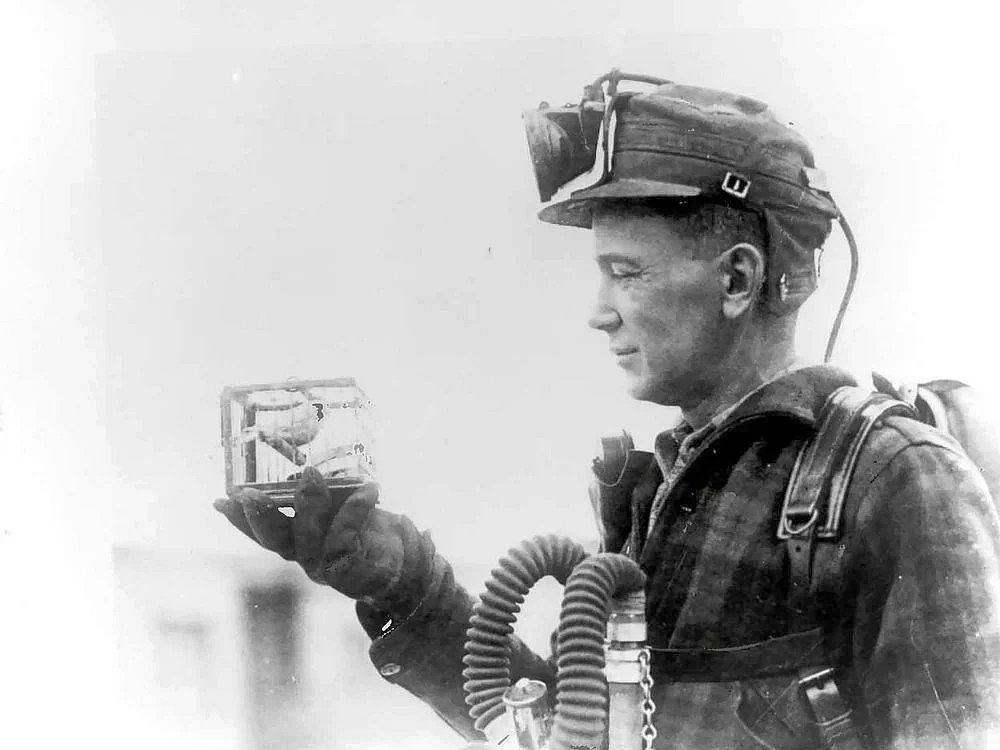
So the case against alarm is one of proportion. What the evidence shows is a slowdown in hiring at the bottom of a few occupations, not mass joblessness. The case against complacency is that this is the stage at which such trends are cheapest to meet. The miner’s canary did not need to be right about the gas to be worth heeding; it only had to stop the miners walking into it blind.
The policy response should follow from that. Rules that tax or ban the technology, or oblige firms to hire juniors they do not want, would protect last year’s job descriptions at the expense of next year’s growth, and they would hurt most the young people they claim to help. Better to make first jobs cheaper to create and skills easier to acquire: lighter payroll costs on a worker’s first year, apprenticeships that count towards student aid, and portable credentials that let a 23-year-old prove she can do what a model cannot. Employers have a part too. A firm that stops training juniors today is eating its seed corn, and will find in five years that the senior people it needs were never made.
The evidence is also still arriving. The next jobs reports, with better data and fewer revisions, will say more than any single paper can. Until then the sensible reading is the dull one: AI is probably changing who gets hired first, and policymakers should watch that closely while declining to legislate against a hunch.
Graduates, meanwhile, may reasonably conclude that the safest degree is the one a machine cannot yet sit through.
This article appeared in the Business & Finance section of Issue No. 3, 11 October to 17 October 2026
Sources
- A New Stanford Analysis Reveals Who's Losing Jobs to AI TIME, 2025-08-26 abcdefg
- Is AI Contributing to Rising Unemployment? Evidence from Occupational Variation Federal Reserve Bank of St. Louis, On the Economy, 2025-08-26 abc
- The Employment Situation, July 2025 US Bureau of Labor Statistics, 2025-08-01 ab