Platform power
Unfollowed
Twitter and Facebook were within their rights to cut off Donald Trump, but a power this large needs published rules and an appeal, not a decision made on a Friday evening
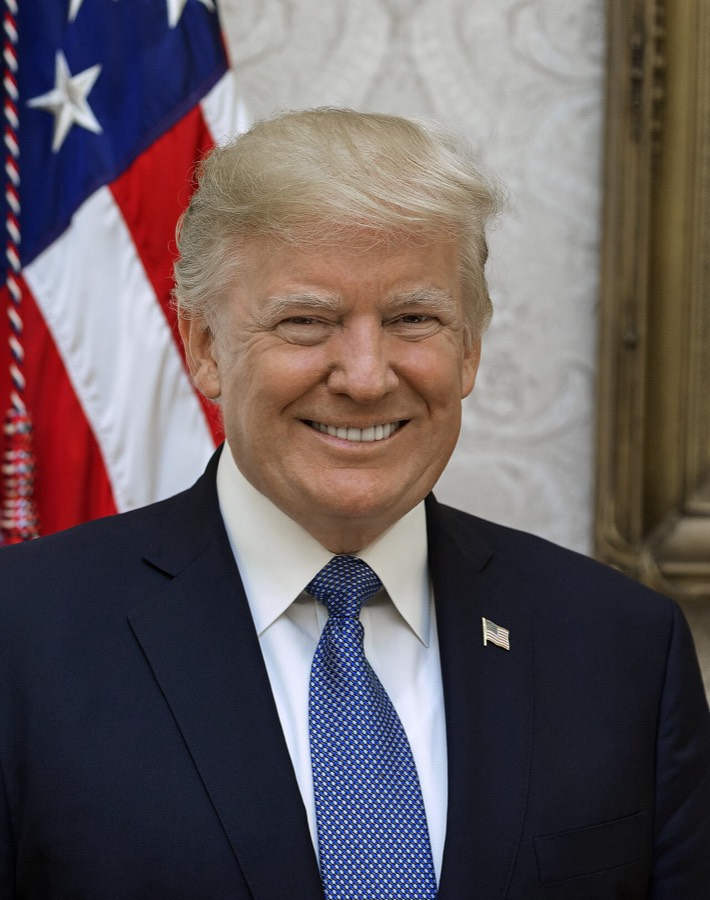

Donald Trump’s favourite channel to the public was a single account that nearly 89 million people followed.1PoynterTwitter permanently suspends Trump from its platform, citing 'risk of further incitement of violence'8 Jan 2021 On Friday evening, 8 January, a company in San Francisco switched it off.1PoynterTwitter permanently suspends Trump from its platform, citing 'risk of further incitement of violence'8 Jan 2021 No court was consulted, no vote was taken and no appeal was offered. This is what a private firm can do to a sitting president, and it deserves better than either cheering or alarm.
Start with what happened. On Wednesday a crowd loyal to Mr Trump stormed the Capitol.3The Boston GlobeTwitter bans Trump, citing risk of violent incitement8 Jan 2021 Twitter locked his account for 12 hours over a video repeating false claims about the election, and warned that further violations would mean a permanent ban.1PoynterTwitter permanently suspends Trump from its platform, citing 'risk of further incitement of violence'8 Jan 2021 It lifted the lock on Thursday. On Friday it reviewed two of his tweets, one saying that “I will not be going to the Inauguration on January 20th” and one saying that his supporters “will not be disrespected or treated unfairly in any way, shape or form!!!”1PoynterTwitter permanently suspends Trump from its platform, citing 'risk of further incitement of violence'8 Jan 2021,3The Boston GlobeTwitter bans Trump, citing risk of violent incitement8 Jan 2021 It concluded, under its “Glorification of Violence” policy, that they were “highly likely to encourage and inspire people” to repeat what happened on Wednesday, and suspended the account “due to the risk of further incitement of violence.”2Action News JaxTwitter permanently suspends Trump's account8 Jan 2021,3The Boston GlobeTwitter bans Trump, citing risk of violent incitement8 Jan 2021 Facebook had got there a day earlier. Mark Zuckerberg, its chief executive, blocked Mr Trump from Facebook and Instagram “indefinitely and at least for the next two weeks until the peaceful transition of power is complete.”1PoynterTwitter permanently suspends Trump from its platform, citing 'risk of further incitement of violence'8 Jan 2021,4Mark Zuckerberg, FacebookThe shocking events of the last 24 hours7 Jan 2021
We think the companies were right to act. A private firm is not the state. Twitter’s terms bar the glorification of violence, a crowd had just stormed the Capitol,3The Boston GlobeTwitter bans Trump, citing risk of violent incitement8 Jan 2021 and the man at its head was still posting. A newspaper that declined to print an editorial calling for a repeat would not be accused of censorship. Mr Trump’s reply, that “we will not be silenced” and “Twitter is not about free speech”, is therefore not quite the point.2Action News JaxTwitter permanently suspends Trump's account8 Jan 2021 He is free to speak. He is not owed a megaphone.
The best answer to that argument is also a good one. The megaphone is not a newspaper. Nearly 89 million followers is a public square’s worth of audience, and two or three firms control the squares that matter. When the owners of the squares can remove a head of state in an afternoon, it is hard to say with a straight face that nobody has power over the political conversation. Nor is it comforting that some of the people cheering today, who like this result, will be unable to object to the next one.
We would answer in two parts. First, the ban is defensible; the power behind it is the trouble. Twitter’s rules were not written with a sitting president in mind, and the warning it gave on Wednesday was the first sign of how they would apply. A rule that is applied only when the crisis arrives is a decision, not a rule. Reasonable people, including those who agree with the outcome, can ask what the standard was and who set it.
Second, a decision made in a hurry is not a good template for the next one. Two firms, within a day of each other, reached similar verdicts on the same man. They did not, as far as the public record shows, hold a hearing, name the person who decided or say what Mr Trump could do to get back. Facebook’s block has an end date. Twitter’s is called permanent and has no stated route back. Due process is not a courtesy reserved for the sympathetic. It is the habit that makes a punishment legitimate even when it is deserved.
So what should happen? The platforms should publish, in advance, the standard for removing an elected official and who gets to apply it. They should give any removed account a written reason and a way to contest it before someone who did not make the first call. And legislators who think the problem is the firms’ power, not their judgement, should decide whether they want it split up, regulated like a utility, or left alone. Shouting at Silicon Valley from the sidelines is not a policy.
Mr Trump can still be heard. He has press conferences, a podium and a White House that he occupies until 20 January. The harder question is the one he leaves behind: who elected the people who switched him off, and who gets to switch them off in turn?
This article appeared in the Leaders section of Issue No. 1, 27 September to 3 October 2026
Sources
- Twitter permanently suspends Trump from its platform, citing 'risk of further incitement of violence' Poynter, 2021-01-08 abcde
- Twitter permanently suspends Trump's account Action News Jax, 2021-01-08 ab
- Twitter bans Trump, citing risk of violent incitement The Boston Globe, 2021-01-08 abcd
- The shocking events of the last 24 hours Mark Zuckerberg, Facebook, 2021-01-07 a