Australia's social-media ban
Sweet sixteen
Australia's under-16 ban answers a real collective-action problem, but it fines platforms for an age check nobody has yet shown can work, and should have waited for the trial.
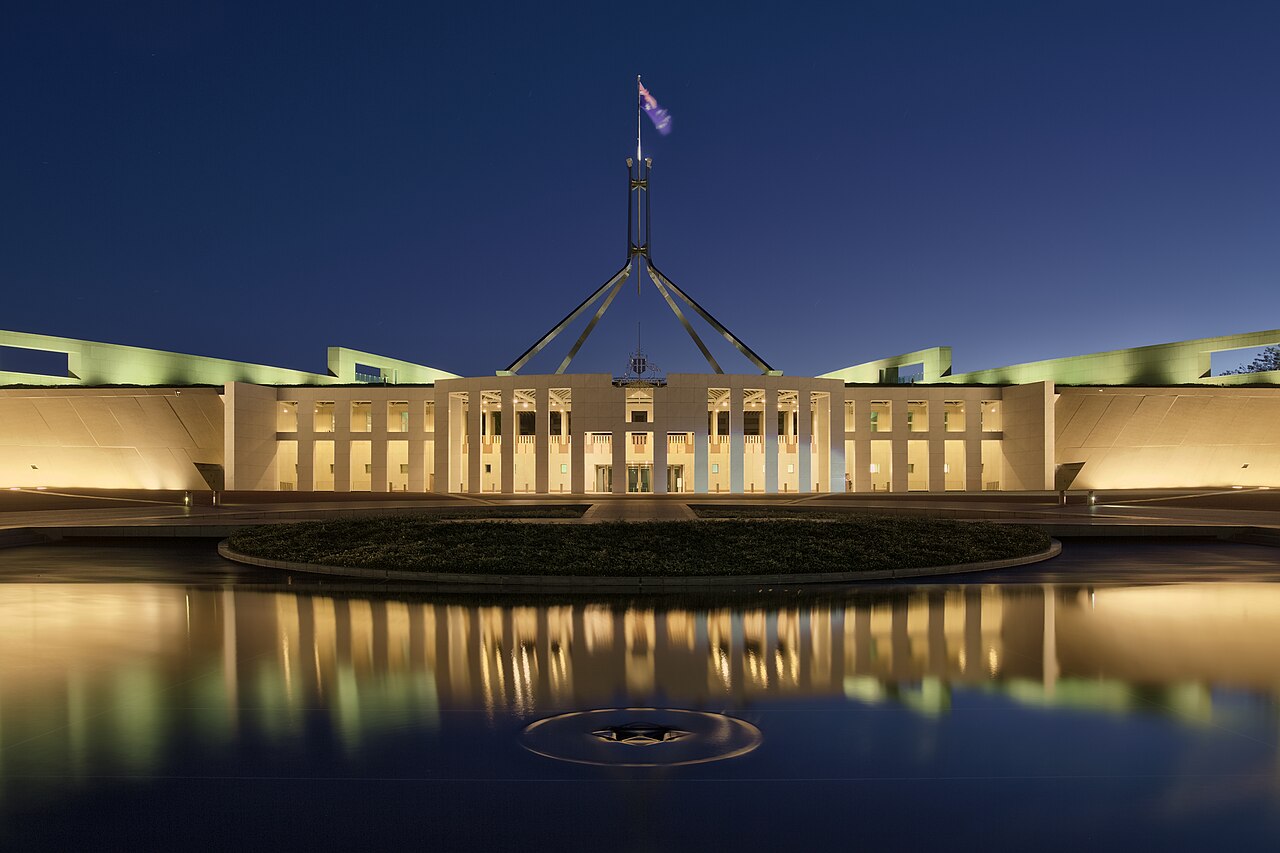

Politicians rarely pass anything that 77% of voters want, and rarer still is the speed. YouGov polled 1,515 Australians between 15th and 21st November and found that 77% backed a minimum age of 16 for social media, up from 61% in August.3YouGovSupport for under-16 social media ban soars to 77% among Australians26 Nov 2024 On 29th November the federal parliament obliged. Anthony Albanese, the prime minister, said that “social media is doing social harm to our kids” and that “we’ve called time on it”.1Prime Minister of AustraliaSocial media reforms to protect our kids online pass Parliament29 Nov 2024
The law tells Snapchat, TikTok, Facebook, Instagram, X and their like to take “reasonable steps” to keep under-16s from holding accounts, on pain of fines of up to A$49.5m for systemic breaches.1Prime Minister of AustraliaSocial media reforms to protect our kids online pass Parliament29 Nov 2024 Messaging, gaming and services for education or health, such as Google Classroom and YouTube, are exempt.1Prime Minister of AustraliaSocial media reforms to protect our kids online pass Parliament29 Nov 2024 We share the worry behind it. We do not think this is the way to act on it.
Begin with what the ban gets right. A teenager who quits Instagram alone loses his friends; a whole year group that quits together loses nothing. That is a collective-action problem, and parents, the market’s usual remedy, cannot solve it one household at a time. Putting the duty on firms rather than on children or parents is also sound: the firms have the data, the engineers and the money.1Prime Minister of AustraliaSocial media reforms to protect our kids online pass Parliament29 Nov 2024 The government has been careful on privacy, too. Age-check data must be destroyed after use, and nobody can be forced to hand over government ID, including a digital one.1Prime Minister of AustraliaSocial media reforms to protect our kids online pass Parliament29 Nov 2024
Now the trouble. The statute names no platforms. It covers any service whose “sole purpose, or a significant purpose” is “online social interaction”, which leaves the regulator to decide who is in.2The ConversationAustralia's social media ban for kids under 16 just became law. How it will work remains a mystery28 Nov 2024 It also demands an age check without saying how one is done. A credit card tied to an app-store account is one proxy, and it would lock out adults who lack a card. Facial age estimation is being trialled by a consortium, with results not due until the middle of 2025, and the technology has documented gaps in accuracy between groups.2The ConversationAustralia's social media ban for kids under 16 just became law. How it will work remains a mystery28 Nov 2024 The Australian Human Rights Commission has said the government rushed the bill without settling the detail or how it would work in practice.2The ConversationAustralia's social media ban for kids under 16 just became law. How it will work remains a mystery28 Nov 2024
In short, parliament has legislated the penalty before the method. Firms facing eight-figure fines for failing a test they cannot yet pass will do what firms do: collect more data than they need, block more adults than they should and lobby for the definition to cover someone else. Teenagers, for their part, have never lost a contest of ingenuity with a login screen. They can still view much of what these platforms show without an account at all.2The ConversationAustralia's social media ban for kids under 16 just became law. How it will work remains a mystery28 Nov 2024
The strongest reply is that something had to be done. Michelle Rowland, the communications minister, puts it thus: “to do nothing is simply not an option”.1Prime Minister of AustraliaSocial media reforms to protect our kids online pass Parliament29 Nov 2024 Parents are exhausted, the polling is lopsided and a ban gives a clean line where a vague duty of care would give lawyers a long lunch. Quite so. But a clean line that cannot be enforced is not clean; it is a promise. And the better tool was already on the table. The government’s plan for a “digital duty of care”, which 75% of respondents also back, would hold firms to account for what their products do to young users without pretending that every child can be identified at the door.3YouGovSupport for under-16 social media ban soars to 77% among Australians26 Nov 2024 It has no timetable.2The ConversationAustralia's social media ban for kids under 16 just became law. How it will work remains a mystery28 Nov 2024
There is a market-friendly fix. Verify age once, at the device or app-store level, where the check is cheap and the data stays with a firm that already holds a card on file, and let apps ask a yes-or-no question. Hold the penalties back until the trial reports. The law does not take effect for 12 months at most, and an independent review is due after two years, so there is time to get the order right.1Prime Minister of AustraliaSocial media reforms to protect our kids online pass Parliament29 Nov 2024 2The ConversationAustralia's social media ban for kids under 16 just became law. How it will work remains a mystery28 Nov 2024
Australia has written the sentence before finding the verb. The rest of the world will be watching, and taking notes in the margin.
This article appeared in the Policy & Regulation section of Issue No. 3, 11 October to 17 October 2026
Sources
- Social media reforms to protect our kids online pass Parliament Prime Minister of Australia, 2024-11-29 abcdefg
- Australia's social media ban for kids under 16 just became law. How it will work remains a mystery The Conversation, 2024-11-28 abcdef
- Support for under-16 social media ban soars to 77% among Australians YouGov, 2024-11-26 ab