America v Google
Spare the Chrome
Judge Mehta was right to leave Google its browser and its phone software, and America should now spend its energy on making the data-sharing order work rather than on an appeal for a break-up.
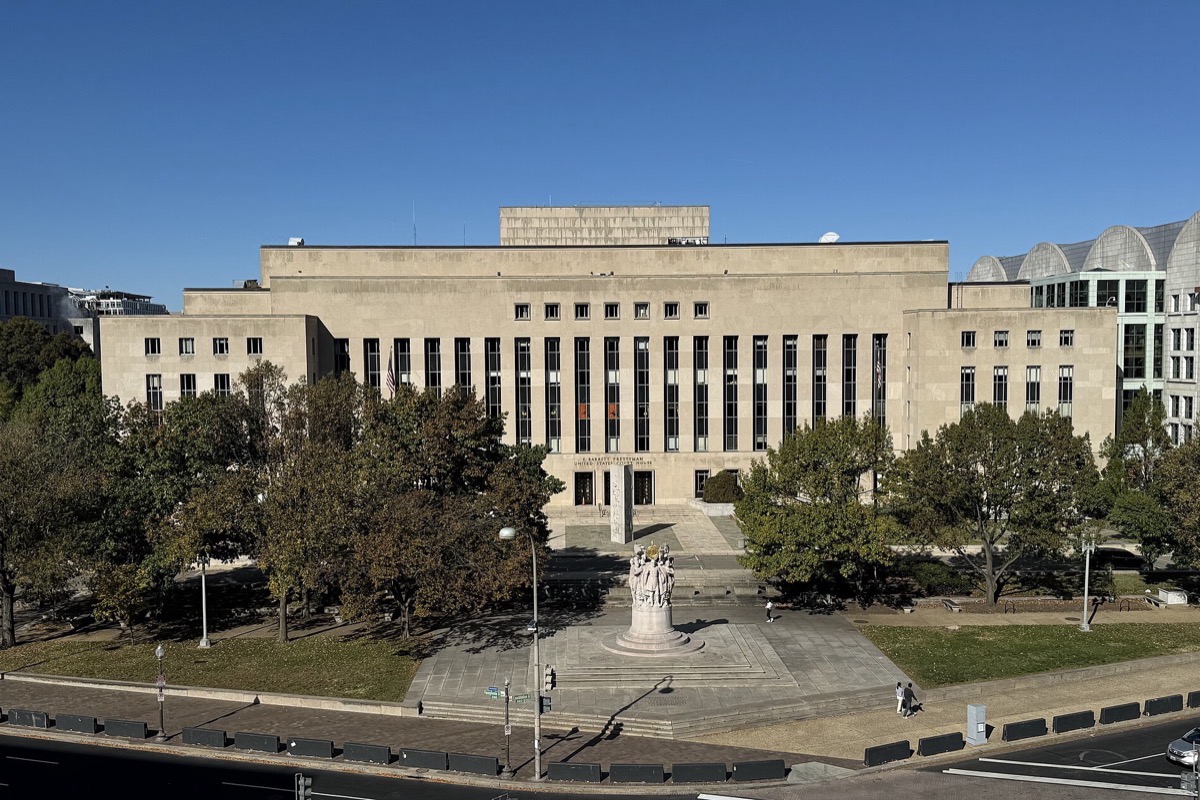

Google has been found to have broken the law, and has been allowed to keep almost everything that made breaking it worthwhile. On 2 September 2025 Judge Amit Mehta, ruling in the case the Justice Department filed in October 20203US Department of JusticeJustice Department sues monopolist Google for violating antitrust laws20 Oct 2020 , declined1US District Court for the District of Columbia, via CourtListenerUnited States v. Google LLC, memorandum opinion on remedies, No. 1:20-cv-03010 (D.D.C.)2 Sept 2025 to order the sale of Chrome or Android.2CNNGoogle will not be forced to sell off Chrome or Android, judge rules in landmark antitrust ruling2 Sept 2025 He did not ban Google’s payments to the firms that put its search box on their devices. Those who wanted a break-up call the result a slap on the wrist. We think it is the best outcome the facts allowed, and that the sensible next step is to stop arguing about what the judge left out.
Start with what the money shows. Google paid out more than $26bn in “traffic acquisition costs”1US District Court for the District of Columbia, via CourtListenerUnited States v. Google LLC, memorandum opinion on remedies, No. 1:20-cv-03010 (D.D.C.)2 Sept 2025 in 2021, and Apple alone received an estimated $20bn in 20221US District Court for the District of Columbia, via CourtListenerUnited States v. Google LLC, memorandum opinion on remedies, No. 1:20-cv-03010 (D.D.C.)2 Sept 2025 . Over the same years Google’s advertising revenue went from nearly $47bn in 2014 to more than $146bn in 20211US District Court for the District of Columbia, via CourtListenerUnited States v. Google LLC, memorandum opinion on remedies, No. 1:20-cv-03010 (D.D.C.)2 Sept 2025 . The default was a good investment.
The new rivals
Google's estimate of daily queries, 28 March 2025, millions
| Daily queries, m | |
|---|---|
| ChatGPT | 1200 |
| MetaAI | 200 |
| Gemini | 140 |
| Grok | 75 |
| DeepSeek | 50 |
| Perplexity | 30 |
Source: United States v. Google LLC, remedies opinion (D.D.C., 2 September 2025)1
The judge’s answer is more careful than the headlines. Exclusive contracts are banned1US District Court for the District of Columbia, via CourtListenerUnited States v. Google LLC, memorandum opinion on remedies, No. 1:20-cv-03010 (D.D.C.)2 Sept 2025 for Search, Chrome, Google Assistant and the Gemini app, and so are revenue-share deals that tie a partner to Google for more than a year. Payments themselves may continue. Google must share some search-index and user-interaction data with rivals, though not ads data, and must offer them search and text-ad syndication. There will be no choice screens. A Technical Committee will police it all for a six-year term1US District Court for the District of Columbia, via CourtListenerUnited States v. Google LLC, memorandum opinion on remedies, No. 1:20-cv-03010 (D.D.C.)2 Sept 2025 .
Why did the government lose the big asks? Partly because the market moved. “The emergence of GenAI changed the course of this case,” wrote the judge1US District Court for the District of Columbia, via CourtListenerUnited States v. Google LLC, memorandum opinion on remedies, No. 1:20-cv-03010 (D.D.C.)2 Sept 2025 , noting that no witness at the liability trial had testified that such products posed a near-term threat to search engines. Google’s own estimate is that ChatGPT handled 1.2bn queries a day1US District Court for the District of Columbia, via CourtListenerUnited States v. Google LLC, memorandum opinion on remedies, No. 1:20-cv-03010 (D.D.C.)2 Sept 2025 in March 2025, against 140m for Gemini. Selling Chrome to cure a monopoly in search would be an odd rescue of a market where the challenger is not a browser at all.
Partly, too, the judge knew his limits. Courts “must approach the task of crafting remedies with a healthy dose of humility”1US District Court for the District of Columbia, via CourtListenerUnited States v. Google LLC, memorandum opinion on remedies, No. 1:20-cv-03010 (D.D.C.)2 Sept 2025 , he wrote, since here the court is asked to “gaze into a crystal ball and look to the future. Not exactly a judge’s forte.” Quite so. The plaintiffs overreached1US District Court for the District of Columbia, via CourtListenerUnited States v. Google LLC, memorandum opinion on remedies, No. 1:20-cv-03010 (D.D.C.)2 Sept 2025 on Chrome and Android, he found, because Google did not use those assets to impose the illegal restraints. And cutting off payments would cause “substantial, in some cases crippling, downstream harms” to distribution partners, related markets and consumers.1US District Court for the District of Columbia, via CourtListenerUnited States v. Google LLC, memorandum opinion on remedies, No. 1:20-cv-03010 (D.D.C.)2 Sept 2025,2CNNGoogle will not be forced to sell off Chrome or Android, judge rules in landmark antitrust ruling2 Sept 2025 A remedy that damaged the people it was meant to help would have been a poor trade.
The strongest objection comes from the other side. A ban on exclusivity that leaves the cheques flowing, say the critics, changes the paperwork and not the habit. Without choice screens, users will still meet Google first. That is a fair worry. But the ban bites where it counts: a partner can no longer be locked in for more than a year, so every contract comes up for renewal and every renewal is a negotiation. Apple can take a better offer, and Google must now make one. The judge also found that choice screens had not been shown1US District Court for the District of Columbia, via CourtListenerUnited States v. Google LLC, memorandum opinion on remedies, No. 1:20-cv-03010 (D.D.C.)2 Sept 2025 to help competition, and we would not demand a remedy on faith.
The part of the order worth fighting for is the data. A search engine improves with every query it sees, and a rival cannot buy queries it never had. Forcing Google to share some of its index and user-interaction data attacks the real barrier to entry, which was never the browser. Here the Technical Committee matters more than any headline. The risk is that “qualified competitors” are defined narrowly, the data arrives late and stale, and the whole apparatus is left to gather dust.
The Justice Department says it will “continue to review the opinion to consider the Department’s options and next steps”2CNNGoogle will not be forced to sell off Chrome or Android, judge rules in landmark antitrust ruling2 Sept 2025 , in the words of Abigail Slater, the assistant attorney-general. Our advice is to review it briefly. An appeal for Chrome would spend years on the one remedy a judge has already found unjustified, while the order that works sits unenforced. Take the win, and hold Google to it.
Google was caught buying its way to the top. It has now been told it may keep paying, but only for a year at a time. That is no punishment. It is, for a firm used to long leases, a year-to-year tenancy.
This article appeared in the Leaders section of Issue No. 1, 27 September to 3 October 2026
Sources
- United States v. Google LLC, memorandum opinion on remedies, No. 1:20-cv-03010 (D.D.C.) US District Court for the District of Columbia, via CourtListener, 2025-09-02 abcdefghijkl
- Google will not be forced to sell off Chrome or Android, judge rules in landmark antitrust ruling CNN, 2025-09-02 abc
- Justice Department sues monopolist Google for violating antitrust laws US Department of Justice, 2020-10-20 a