America v Google
Feeling lucky
The Justice Department's case against Google is narrower than its critics fear and better aimed than its fans realise, and its target should be the price of the default.
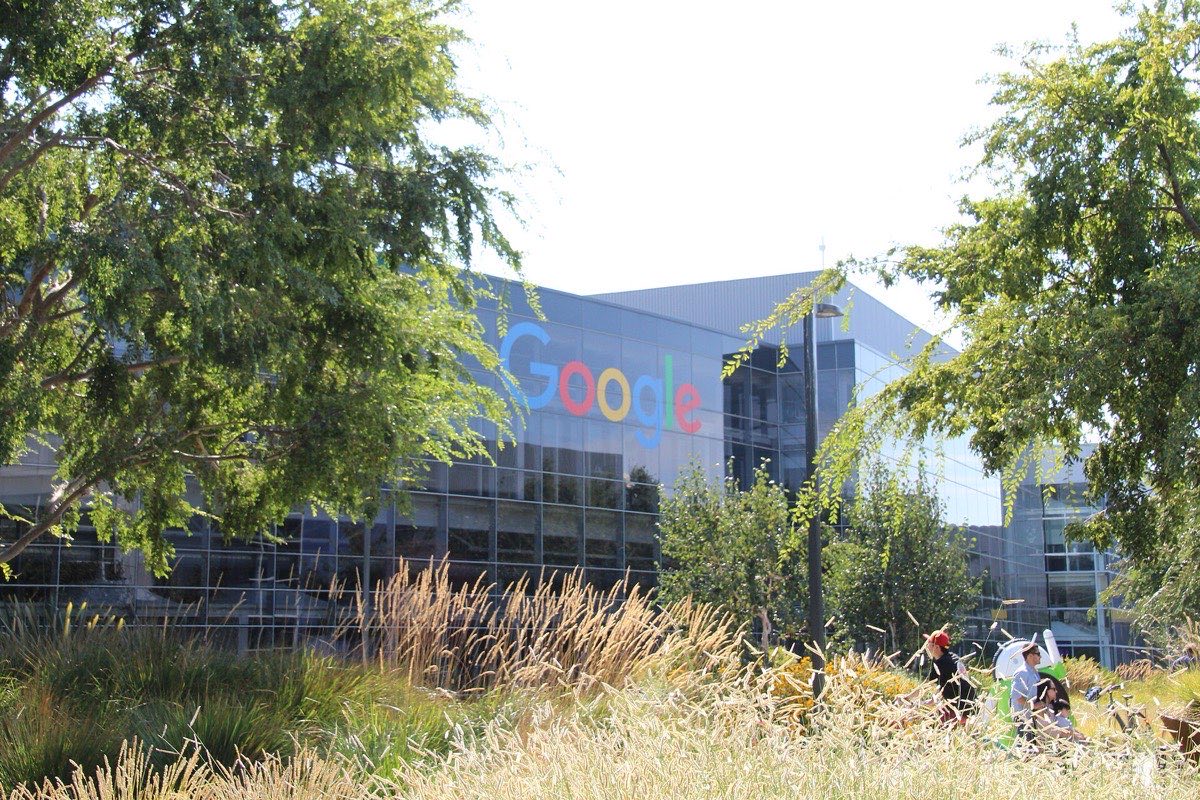

In 1998 the American government sued a software giant, Microsoft, over its grip on how people reached the internet.3AP, via PBS NewsHourJustice Dept. files landmark antitrust case against Google20 Oct 2020 The firm spent the next few years in court. On 20 October 2020 the Justice Department, joined by 11 states3AP, via PBS NewsHourJustice Dept. files landmark antitrust case against Google20 Oct 2020 , filed a suit1US Department of JusticeJustice Department sues monopolist Google for violating antitrust laws20 Oct 2020,2National Association of Attorneys GeneralUnited States and Plaintiff States v. Google, No. 1:20-cv-03010 (D.D.C. Oct. 20, 2020)20 Oct 2020 that Tim Wu of Columbia Law School called “almost a carbon copy”3AP, via PBS NewsHourJustice Dept. files landmark antitrust case against Google20 Oct 2020 of that one. The defendant this time is Google. Its parent, Alphabet, is worth just over $1trn3AP, via PBS NewsHourJustice Dept. files landmark antitrust case against Google20 Oct 2020 .
Our first reaction was that it felt late. Our second, having read the complaint, is that it is better than its timing, which is two weeks before a presidential election.
The prize
Alphabet, revenue from Google Search & other, $bn
| Search & other | |
|---|---|
| 2017 | 69.8 |
| 2018 | 85.3 |
| 2019 | 98.1 |
Source: Alphabet Form 10-K, 20196
The argument is simple. Google, the government says, has roughly 90% of general search in America and 95% on mobile5OrrickU.S. DOJ, State Attorneys General file antitrust complaint against Google . Nobody claims Google got there by cheating. The charge is that it has stayed there by buying the defaults: it pays “billions each year”5OrrickU.S. DOJ, State Attorneys General file antitrust complaint against Google to phone-makers and carriers, so that its search box is the one users find already in place. “Google is the gateway to the internet and a search advertising behemoth,” said Jeffrey Rosen, the deputy attorney-general. “It has maintained its monopoly power through exclusionary practices that are harmful to competition.”3AP, via PBS NewsHourJustice Dept. files landmark antitrust case against Google20 Oct 2020
The juiciest detail sits on page 364NPRGoogle paid Apple billions to dominate search on iPhones, Justice Department says22 Oct 2020 . Google is estimated to pay Apple between $8bn and $12bn a year to be the default in Safari, Siri and Spotlight.4NPRGoogle paid Apple billions to dominate search on iPhones, Justice Department says22 Oct 2020 The complaint says Google staff called the prospect of losing that slot “Code Red”.4NPRGoogle paid Apple billions to dominate search on iPhones, Justice Department says22 Oct 2020 It also says that after Sundar Pichai and Tim Cook met in 2018, a senior Apple employee wrote to Google: “Our vision is to work as if we are one company.”4NPRGoogle paid Apple billions to dominate search on iPhones, Justice Department says22 Oct 2020 Firms that are supposed to compete rarely put such things in writing.
The money explains why. Revenue from Google Search and related products rose from $69.8bn in 2017 to $98.1bn in 20196SECAlphabet Inc. Form 10-K for fiscal year 20194 Feb 2020 . Over the same years the “traffic acquisition costs” Alphabet paid partners to send it users reached $30.1bn in 20196SECAlphabet Inc. Form 10-K for fiscal year 20194 Feb 2020 . A firm will pay that much for a default only if it thinks the default is worth more, and a default worth that much is a moat.
Google’s reply deserves a hearing. It called the suit “deeply flawed”3AP, via PBS NewsHourJustice Dept. files landmark antitrust case against Google20 Oct 2020 and argues, roughly, that people use Google because it is good. Switching to Bing takes a few taps. Paying for shelf space is what cereal-makers do in supermarkets, and nobody sues Kellogg’s for monopolising breakfast. Users pay nothing for search, so the usual measure of harm, higher prices, is hard to find.
We think that defence is weaker than it sounds. A default that people could change but almost never do is worth billions precisely because inertia is strong. If quality alone kept users loyal, Google would not need to pay Apple up to $12bn a year to keep the slot.4NPRGoogle paid Apple billions to dominate search on iPhones, Justice Department says22 Oct 2020 The cost to consumers is not a price but a missing rival: search engines get better with more queries, and the queries that might have trained a challenger are bought up in advance. This is a market that no outsider can enter, because the outsider would first have to outbid Google for Google’s own profits.
The real question is the remedy, and here the suit is wisely vague. The government asks for “structural relief as needed”5OrrickU.S. DOJ, State Attorneys General file antitrust complaint against Google , which leaves room for anything from a ban on exclusive deals to a break-up. Mr Wu himself doubts the likely remedies are “particularly likely to transform the broader tech ecosystem”3AP, via PBS NewsHourJustice Dept. files landmark antitrust case against Google20 Oct 2020 . He may be right, and it may not matter. The point of the Microsoft case, which Mr Wu’s comparison invites, was less to punish the incumbent than to keep the door open for whoever came next.
That is the standard we would hold this suit to. Breaking up Google would satisfy those who dislike big companies on principle, but it would not create a rival search engine. Ending exclusive defaults, and making Google compete for each one in the open, could. Mr Rosen’s own warning was that without enforcement “we could lose the next wave of innovation”3AP, via PBS NewsHourJustice Dept. files landmark antitrust case against Google20 Oct 2020 . The aim should be modest: to stop Google buying the choices users would otherwise make for themselves, and then let them choose.
The case will take years. Google can afford them. A firm that pays this much to stay the default does not much fear any single verdict. Its worry is that one day it might have to win users on the merits.
This article appeared in the Policy & Regulation section of Issue No. 1, 27 September to 3 October 2026
Sources
- Justice Department sues monopolist Google for violating antitrust laws US Department of Justice, 2020-10-20 a
- United States and Plaintiff States v. Google, No. 1:20-cv-03010 (D.D.C. Oct. 20, 2020) National Association of Attorneys General, 2020-10-20 a
- Justice Dept. files landmark antitrust case against Google AP, via PBS NewsHour, 2020-10-20 abcdefgh
- Google paid Apple billions to dominate search on iPhones, Justice Department says NPR, 2020-10-22 abcde
- U.S. DOJ, State Attorneys General file antitrust complaint against Google Orrick abc
- Alphabet Inc. Form 10-K for fiscal year 2019 SEC, 2020-02-04 ab