Section 230
Label and liable
Mr Trump's order asks a regulator to rewrite a law that Congress wrote plainly, and if it worked it would make platforms more cautious editors, not more neutral ones.
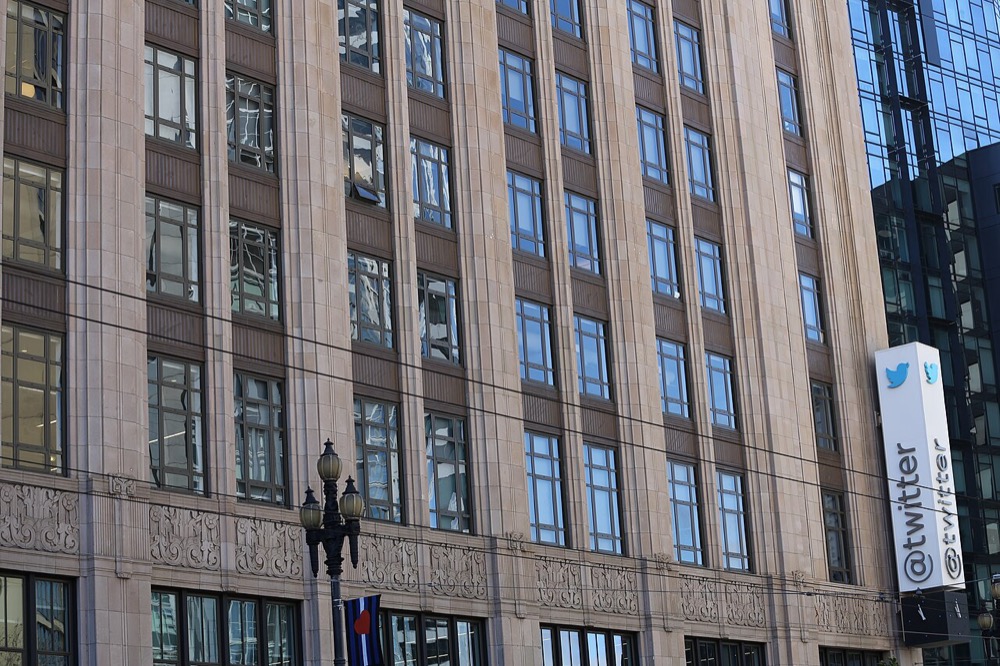

A hyperlink did it. On 26 May Twitter attached a prompt reading “Get the facts about mail-in ballots” to two of the president’s tweets, which it marked “potentially misleading”.3Spectrum NewsTrump launches counterattack on social media after Twitter fact-checks him29 May 2020 Two days later Donald Trump signed an executive order on “preventing online censorship”.1The White House (Trump administration archive)Executive Order on Preventing Online Censorship28 May 2020 The most powerful megaphone in politics had been fact-checked, and the president’s chosen remedy was to go after a statute.
The statute is Section 230 of the Communications Decency Act, which is nearly 25 years old. Its core is 26 words: no provider or user of an interactive computer service “shall be treated as the publisher or speaker” of information provided by someone else.2Legal Information Institute, Cornell Law School47 U.S.C. 230: Protection for private blocking and screening of offensive material A second clause protects “any action voluntarily taken in good faith to restrict access to” material the provider finds “objectionable”.2Legal Information Institute, Cornell Law School47 U.S.C. 230: Protection for private blocking and screening of offensive material Together they let platforms host millions of strangers’ words without being sued for each one, and let them tidy up without being sued for tidying badly. Congress also stated its aim: “to preserve the vibrant and competitive free market” for the internet, “unfettered by Federal or State regulation”.2Legal Information Institute, Cornell Law School47 U.S.C. 230: Protection for private blocking and screening of offensive material
The order does not repeal any of this, because a president cannot. Instead it declares that the immunity “should not extend beyond its text and purpose”, and that a provider which restricts speech in bad faith “should properly lose the limited liability shield”.1The White House (Trump administration archive)Executive Order on Preventing Online Censorship28 May 2020 It tells the Commerce Secretary to ask the Federal Communications Commission, within 60 days, to start a rulemaking. It tells the Federal Trade Commission to “consider taking action”, the Justice Department to review platforms’ “viewpoint-based speech restrictions”, and every agency head to review federal spending on advertising with the platforms.1The White House (Trump administration archive)Executive Order on Preventing Online Censorship28 May 2020
We think this is bad law and, in the main, bad policy. Start with the law. The FCC regulates telephone companies and broadcasters; Congress has never given it a brief to supervise the editorial choices of websites. A rulemaking that reads “good faith” as a licence for officials to judge a company’s motives would be in court the moment it appeared. William Barr, the attorney-general, said the order would be paired with possible new legislation that would almost certainly be challenged in the courts or Congress.3Spectrum NewsTrump launches counterattack on social media after Twitter fact-checks him29 May 2020 Twitter called the order “a reactionary and politicized approach to a landmark law”.3Spectrum NewsTrump launches counterattack on social media after Twitter fact-checks him29 May 2020 Twitter has an interest in saying so. It does not follow that Twitter is wrong.
Then consider the logic. The complaint is that platforms act as editors, yet the remedy threatens liability for acting as editors. If a label can cost a company its shield, the safest label is none at all, and the safest moderation policy is to remove anything that might draw a lawsuit. A firm facing liability for every post it hosts does not become a neutral conduit. It becomes a nervous censor. Mark Zuckerberg of Facebook, whose firm had so far declined to fact-check the president, said the day before the order that “Facebook shouldn’t be the arbiter of truth of everything that people say online”.4Fox NewsZuckerberg knocks Twitter for fact-checking Trump, says private companies shouldn't be 'the arbiter of truth'27 May 2020 Strip the shield and he may have to be exactly that.
The best case for the other side deserves a hearing. Section 230 was written when the internet was a modest affair of bulletin boards. Today a few firms decide what hundreds of millions of people see, and they apply their rules opaquely and sometimes inconsistently. Conservatives are not the only ones who feel it. Reasonable people can ask whether a 1996 liability shield should still cover everything a modern platform does. Congress is the place to have that argument, with hearings, drafts and a vote. A power that large should not be conjured by pointing a pen at an agency.
Nor is the shield a gift to the giants. It protects the small site as much as the large one, and the small one has no legal department to absorb the cost of a suit over a stranger’s comment. Remove it and the people hurt first will be the start-ups that might one day compete with Twitter and Facebook, which is the outcome the statute’s own talk of a competitive market was meant to prevent. Users who dislike one platform’s labels need a rival with different rules. They do not need a regulator with opinions.
The order will probably be tied up in the courts for months and may never produce a rule. Its main effect may be to teach the platforms that a label on the president’s tweets carries a price. A law that spares a host from being sued for a stranger’s words is an odd thing to blame for a stranger’s fact-check.
This article appeared in the Policy & Regulation section of Issue No. 2, 4 October to 10 October 2026
Sources
- Executive Order on Preventing Online Censorship The White House (Trump administration archive), 2020-05-28 abc
- 47 U.S.C. 230: Protection for private blocking and screening of offensive material Legal Information Institute, Cornell Law School abc
- Trump launches counterattack on social media after Twitter fact-checks him Spectrum News, 2020-05-29 abc
- Zuckerberg knocks Twitter for fact-checking Trump, says private companies shouldn't be 'the arbiter of truth' Fox News, 2020-05-27 a