AMD and Xilinx
Programmable profits
AMD is right to pay in its own richly valued shares for Xilinx, and regulators should let a deal that makes Intel's life harder go through.
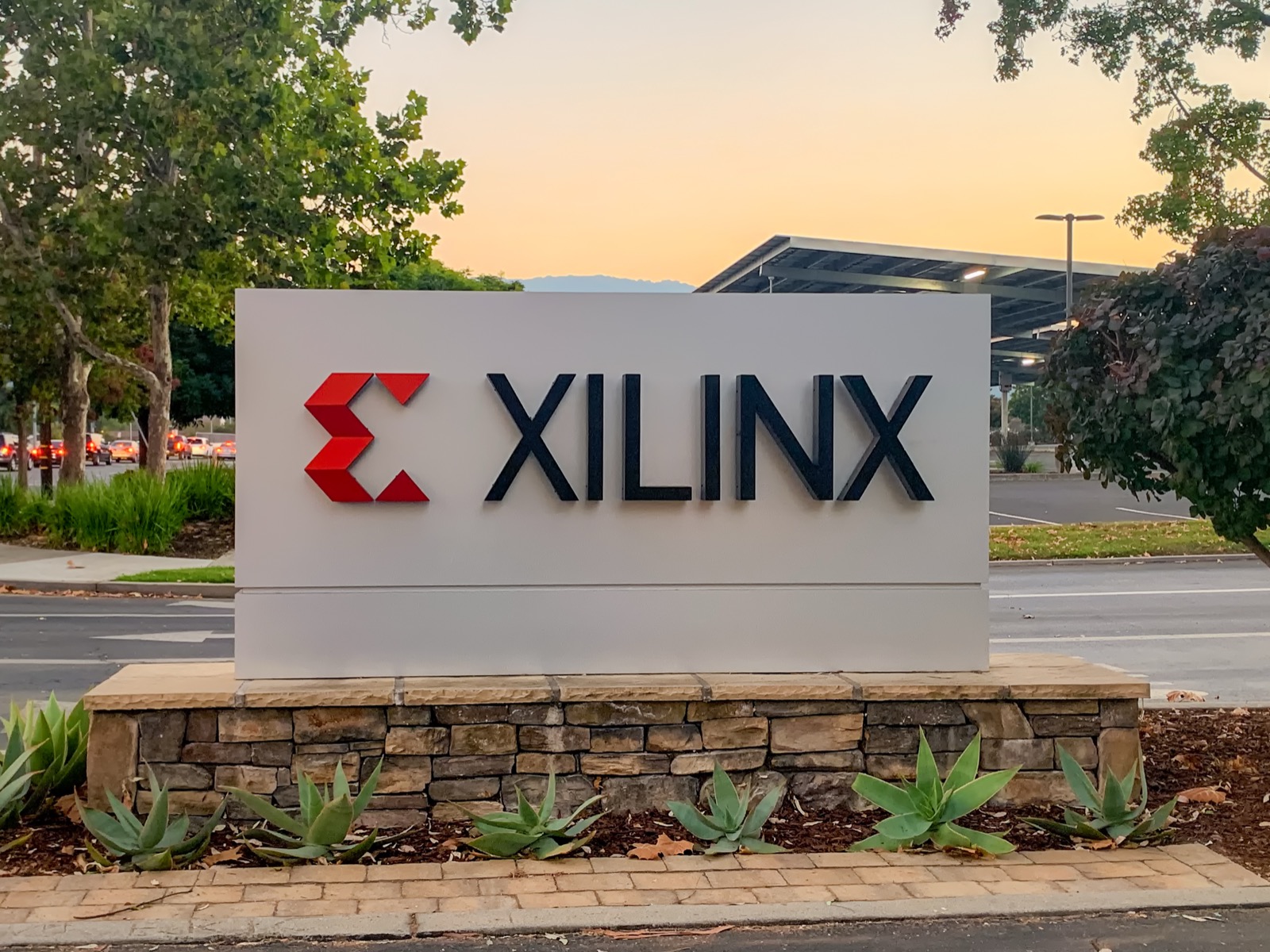

Xilinx made $3.16bn of revenue in the year to March.3SECXilinx Form 10-K for fiscal year 20201 May 2020 On 27 October AMD agreed to pay about $35bn for it, or roughly eleven times that revenue.1AMDAMD to Acquire Xilinx, Creating the Industry's High Performance Computing Leader27 Oct 2020 The price is steep. The logic, we think, is sound, and the method of payment is better still.
Start with the thing being bought. Xilinx invented the field-programmable gate array (FPGA), a chip whose circuitry can be rewired after it leaves the factory. That makes it slower and dearer than a custom chip for any one job, and invaluable when the job keeps changing: a telecoms base station, a cloud data centre, a missile. Xilinx’s fortunes have therefore tracked the spending of telecoms firms and, increasingly, cloud providers. Its data-centre sales grew by 30% in the latest quarter, but they make up only 14% of the total.2FortuneAMD agrees to buy Xilinx in $35 billion all-stock deal27 Oct 2020 It earns less than AMD but earns more of it as profit.2FortuneAMD agrees to buy Xilinx in $35 billion all-stock deal27 Oct 2020
For AMD the pull is data centres. Intel, its old rival, bought Altera, the other big name in FPGAs, in 2015, and told investors the deal would add to earnings and free cash flow within a year of closing.2FortuneAMD agrees to buy Xilinx in $35 billion all-stock deal27 Oct 2020,4IntelIntel Completes Acquisition of Altera28 Dec 2015 Intel has since reported a surprise fall in data-centre chip sales, while AMD has forecast fourth-quarter sales of about $3bn, up 41% on a year earlier.2FortuneAMD agrees to buy Xilinx in $35 billion all-stock deal27 Oct 2020 AMD now wants the same menu as Intel. It says Xilinx lifts its addressable market to $110bn, and expects about $300m of savings within 18 months of closing, mostly from cutting duplicated costs.1AMDAMD to Acquire Xilinx, Creating the Industry's High Performance Computing Leader27 Oct 2020 That is under 1% of the price. Nobody should buy Xilinx for the synergies. They are the rounding error that boards put in slide decks to show they did the sums.
The more interesting part is the cheque. AMD is paying entirely in its own shares: 1.7234 of them for each Xilinx share, which valued the target at about $143 a share, a premium of 25% to Monday’s close.1AMDAMD to Acquire Xilinx, Creating the Industry's High Performance Computing Leader27 Oct 2020,2FortuneAMD agrees to buy Xilinx in $35 billion all-stock deal27 Oct 2020 Xilinx holders will own about 26% of the combined firm.1AMDAMD to Acquire Xilinx, Creating the Industry's High Performance Computing Leader27 Oct 2020 An all-stock deal lets AMD buy a rival without taking on a pile of debt, which is as well when its other big customers are cloud giants racing to spend.2FortuneAMD agrees to buy Xilinx in $35 billion all-stock deal27 Oct 2020 Investors who feared a borrowing spree have been spared one.2FortuneAMD agrees to buy Xilinx in $35 billion all-stock deal27 Oct 2020 It also ties Xilinx’s people to AMD’s share price, which is the sort of incentive that no retention bonus can match.
The risks are real, and the first is the price of the paper. Shares are a fine currency until they stop being one. If AMD’s stock falls by a third before the deal closes, which is expected around the end of 2021, Xilinx holders will have been paid in a currency that bought less than they thought.1AMDAMD to Acquire Xilinx, Creating the Industry's High Performance Computing Leader27 Oct 2020 The exchange ratio is fixed, so the pain lands on them rather than on AMD. The deal is also fenced in with penalties: Xilinx would owe AMD $1bn if it walked away, and AMD would owe $1.5bn.2FortuneAMD agrees to buy Xilinx in $35 billion all-stock deal27 Oct 2020 Both sides are serious.
The second risk is the regulator. The deal needs approval in several jurisdictions, China among them, and AMD itself puts the wait at about 18 months.2FortuneAMD agrees to buy Xilinx in $35 billion all-stock deal27 Oct 2020 Approval in Beijing can be slow and, in a year of American-Chinese chip quarrels, political. It would be a poor use of that power. AMD and Xilinx barely overlap: one sells processors, the other programmable logic. The combination does not shrink anyone’s choices. If anything it widens them, by giving Intel a rival with a comparable range of products in the server room. Competition authorities that spend their days fretting about concentration should note that the market’s biggest incumbent is the one with reason to lose sleep.
The deeper worry is cultural. Mergers between engineering firms tend to go wrong not in the boardroom but in the corridors, as the best people drift off and roadmaps slip. Xilinx’s chief executive, Victor Peng, will become AMD’s president for the Xilinx business, which should help.2FortuneAMD agrees to buy Xilinx in $35 billion all-stock deal27 Oct 2020 He promised that “together, we will lead the new era of high performance and adaptive computing”.1AMDAMD to Acquire Xilinx, Creating the Industry's High Performance Computing Leader27 Oct 2020 Promises of this sort are cheap. Keeping the engineers is dearer.
Still, AMD is paying a high price for a business that is hard to copy, in a currency that costs it nothing today. Regulators should leave it alone. Intel has had five years to enjoy its own FPGAs without much company.
This article appeared in the Business & Finance section of Issue No. 2, 4 October to 10 October 2026
Sources
- AMD to Acquire Xilinx, Creating the Industry's High Performance Computing Leader AMD, 2020-10-27 abcdef
- AMD agrees to buy Xilinx in $35 billion all-stock deal Fortune, 2020-10-27 abcdefghij
- Xilinx Form 10-K for fiscal year 2020 SEC, 2020-05-01 a
- Intel Completes Acquisition of Altera Intel, 2015-12-28 a