Export controls
The silicon curtain
America's sweeping new chip controls on China make strategic sense, but unlike the cold war's embargo they have only one government behind them
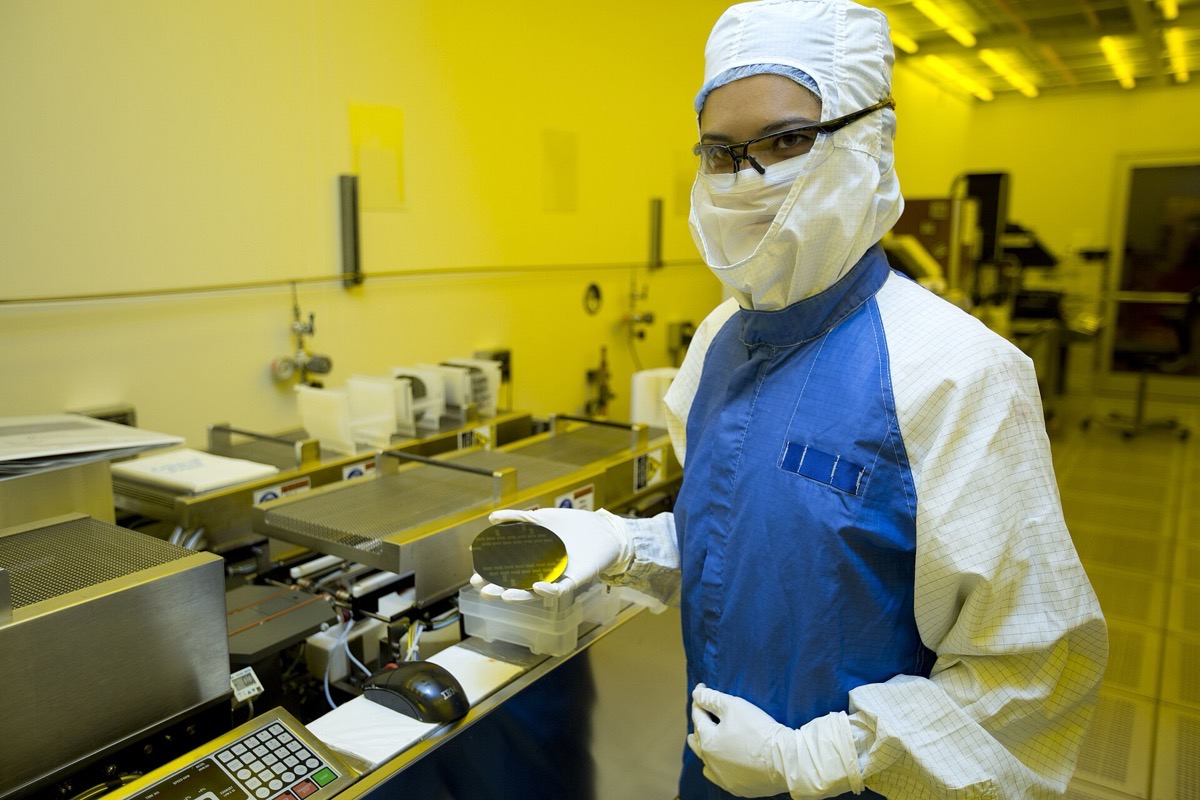

In 1949 America and its allies set up a committee with a forgettable name to keep machine tools, computers and other strategic goods out of communist hands. The Coordinating Committee on Multilateral Export Controls, or CoCom, worked by informal agreement among NATO members and Japan, grew to 17 countries and lasted until 31 March 1994.5US House of Representatives, via GovInfoReport of the Select Committee on US National Security and Military/Commercial Concerns with the People's Republic of China, chapter 9 (Cox report)3 Jan 1999 It was dull and leaky. It was also, for 45 years, the West’s main tool for denying its rival the machines of modern industry.
On 7 October America brought back the idea, with one change: this time it is acting more or less alone. New rules from the Bureau of Industry and Security (BIS), the Commerce Department’s export arm, aim to restrict “the People’s Republic of China’s (PRC’s) ability to both purchase and manufacture certain high-end chips used in military applications”.1Bureau of Industry and Security, US Department of CommerceCommerce Implements New Export Controls on Advanced Computing and Semiconductor Manufacturing Items to the People's Republic of China (PRC)7 Oct 2022
The detail matters. Advanced computing chips, and the computers that contain them, need a licence for China. So do tools and parts for any Chinese fab making logic chips at 16 or 14 nanometres or below, DRAM memory at 18nm half-pitch or less, or NAND flash with 128 layers or more. Licences for Chinese-owned plants face a “presumption of denial”; plants owned by multinationals will be judged case by case. From 12 October American citizens and green-card holders need a licence to help develop or produce chips at such facilities. Thirty-one Chinese entities join the Unverified List, a step short of the full blacklist. Some rules bite at once; the rest by 21 October.1Bureau of Industry and Security, US Department of CommerceCommerce Implements New Export Controls on Advanced Computing and Semiconductor Manufacturing Items to the People's Republic of China (PRC)7 Oct 2022
This is a change of doctrine, not just a longer list. Jake Sullivan, the national security adviser, spelled it out on 16 September.2The White HouseRemarks by National Security Advisor Jake Sullivan at the Special Competitive Studies Project Global Emerging Technologies Summit16 Sept 2022 America used to follow a “sliding scale”, staying “only a couple of generations ahead”. No longer: for “advanced logic and memory chips, we must maintain as large of a lead as possible.”2The White HouseRemarks by National Security Advisor Jake Sullivan at the Special Competitive Studies Project Global Emerging Technologies Summit16 Sept 2022 Export controls were once a speed bump. Now they are meant to be a wall.
Pair the wall with the subsidy. On 9 August President Joe Biden signed the CHIPS and Science Act,3DefenseScoopBiden signs CHIPS and Science Act to spur US-made national security technologies9 Aug 2022,4Congress.govH.R.4346, CHIPS and Science Act9 Aug 2022 which provides about $52.7bn for American chipmaking, research and training, including $39bn of manufacturing incentives, plus a 25% investment tax credit.3DefenseScoopBiden signs CHIPS and Science Act to spur US-made national security technologies9 Aug 2022 Taken together, the policy runs to roughly two parts: build at home, deny abroad.
The case for doing this is serious. BIS says China seeks to become a world leader in artificial intelligence by 2030 and uses its supercomputers to “monitor, track, and surveil” its citizens and modernise its army.1Bureau of Industry and Security, US Department of CommerceCommerce Implements New Export Controls on Advanced Computing and Semiconductor Manufacturing Items to the People's Republic of China (PRC)7 Oct 2022 Chips at the frontier are dual-use in the fullest sense; the same accelerator that trains a translation model can design a missile. It is hard to argue that America should sell the tools of its own displacement for a few quarters of revenue. The rule also strengthens the government’s hand with foreign states that block its inspectors. Where host governments stall end-use checks, firms can be moved from the Unverified List onto the Entity List.1Bureau of Industry and Security, US Department of CommerceCommerce Implements New Export Controls on Advanced Computing and Semiconductor Manufacturing Items to the People's Republic of China (PRC)7 Oct 2022
Our worry is about how this lasts, not whether it is legitimate. CoCom worked because the Soviet Union could not easily buy from France what America refused to sell. Today’s chipmaking supply chain is more spread out than the cold war’s. The press release says only that Commerce “briefed and consulted with close allies and partners”.1Bureau of Industry and Security, US Department of CommerceCommerce Implements New Export Controls on Advanced Computing and Semiconductor Manufacturing Items to the People's Republic of China (PRC)7 Oct 2022 Briefing is not signing up. If the toolmakers in Europe and Japan keep selling what American firms cannot, the main effect of the rules will be to hand market share to them and give Chinese buyers a reason to cultivate local suppliers.
The other risk is to America’s own appeal. The rule on “US persons” is the sharpest edge here. It tells American engineers working in Chinese fabs to choose between their jobs and their passports. That may be justified. But a strategy that relies on having the world’s best talent should make sure that talent keeps coming. Mr Sullivan’s speech, to its credit, announced new immigration pathways for international STEM students and researchers.2The White HouseRemarks by National Security Advisor Jake Sullivan at the Special Competitive Studies Project Global Emerging Technologies Summit16 Sept 2022 Washington should treat that as a matter of urgency, not as a side note.
So we back the direction and question the method. The Biden administration should treat the next few months as a sprint to bring the main toolmaking countries into the same regime, with shared lists and shared enforcement. It should keep the case-by-case licences for multinationals clear and fast, so that the rules punish China’s military rather than the balance sheets of foreign firms with plants there. And it should spend CHIPS money on capacity, not on rewarding firms for factories they would have built anyway.
CoCom lasted 45 years because it had 17 members. A curtain hung from one rod tends to sag.
This article appeared in the Policy & Regulation section of Issue No. 2, 4 October to 10 October 2026
Sources
- Commerce Implements New Export Controls on Advanced Computing and Semiconductor Manufacturing Items to the People's Republic of China (PRC) Bureau of Industry and Security, US Department of Commerce, 2022-10-07 abcde
- Remarks by National Security Advisor Jake Sullivan at the Special Competitive Studies Project Global Emerging Technologies Summit The White House, 2022-09-16 abc
- Biden signs CHIPS and Science Act to spur US-made national security technologies DefenseScoop, 2022-08-09 ab
- H.R.4346, CHIPS and Science Act Congress.gov, 2022-08-09 a
- Report of the Select Committee on US National Security and Military/Commercial Concerns with the People's Republic of China, chapter 9 (Cox report) US House of Representatives, via GovInfo, 1999-01-03 a