Foreign students and America
Leave to remain
America nearly told 1.1m international students to go home over a technicality, and the founders it would have lost are worth far more than the rule's tidiness.
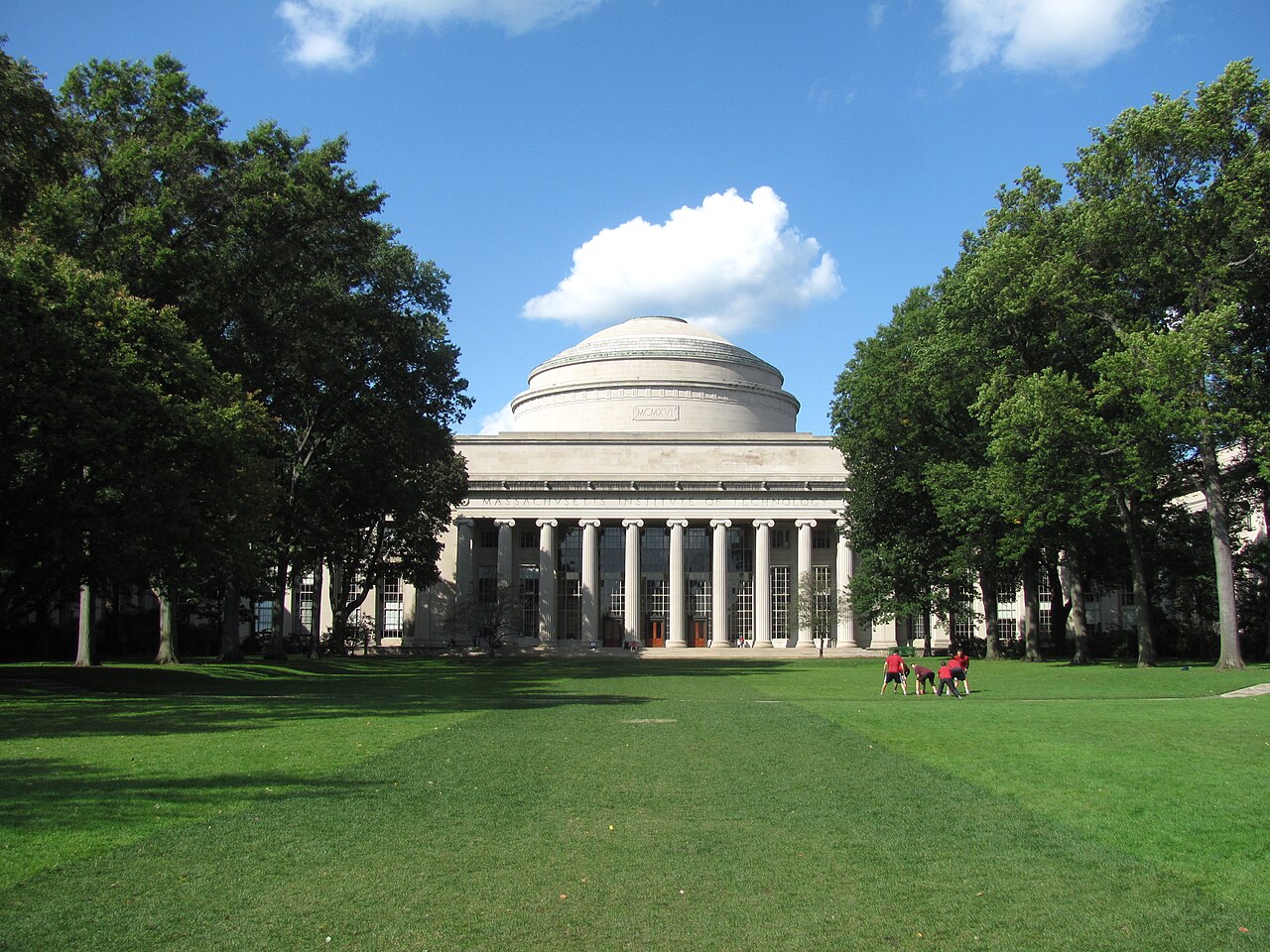

The hearing lasted about four minutes. On the morning of 14 July Judge Allison Burroughs of the federal district court in Boston said that the government had agreed to “return to the status quo”, and a lawyer for Immigration and Customs Enforcement (ICE) confirmed only that she had described it correctly.2GBH News (with the Associated Press)ICE rescinds student visa rule in lawsuit brought by MIT, Harvard14 Jul 2020 Eight days earlier the same agency had announced that students on F-1 and M-1 visas at schools teaching entirely online “may not take a full online course load and remain in the United States”.1US Immigration and Customs EnforcementSEVP modifies temporary exemptions for nonimmigrant students taking online courses during fall 2020 semester6 Jul 2020 Those who did not leave, or transfer to a school with in-person classes, “may face immigration consequences including, but not limited to, the initiation of removal proceedings”.1US Immigration and Customs EnforcementSEVP modifies temporary exemptions for nonimmigrant students taking online courses during fall 2020 semester6 Jul 2020
The rule did not survive a fortnight. It is worth asking why anyone wrote it, because the answer shows how America treats a resource that most countries would pay to import.
Start with the scale. A record 1.09m international students studied in America in 2018-19, contributing $44.7bn to the economy according to figures released with the Institute of International Education’s Open Doors report.3Study in the States, US Department of Homeland SecurityOpen Doors report: international students contribute $44.7 billion to US18 Nov 2019 That is roughly the annual output of a small country, delivered without a single tariff negotiation. A rule that told a sizeable fraction of them to board a plane in the middle of a pandemic, or sit in a classroom their university had judged unsafe, was an odd way to protect it.
The money is the smaller part. The students are also a recruiting pool. A study by the National Foundation for American Policy found that 50 of the 91 private American startups valued at $1bn or more in 2018 had at least one immigrant founder, and that nearly a quarter had a founder who first arrived as an international student.4National Foundation for American PolicyImmigrants and Billion-Dollar Startups24 Oct 2018 The 50 immigrant-founded firms were together worth some $248bn and employed, on average, more than 1,200 people each.4National Foundation for American PolicyImmigrants and Billion-Dollar Startups24 Oct 2018 (The foundation is an advocacy outfit with a view on immigration, and we would not hang a theory on its tallies. The direction, though, is hard to dispute.) America does not merely educate these people. It gets first refusal on their ideas.
So the real cost of the July order was never the semester. It was the signal. A 19-year-old in Bangalore or Beijing choosing between Cambridge, Massachusetts and Cambridge, England had just learned that one government could redefine her status by press release, with no public comment. Harvard and MIT argued that the guidance was issued without justification or a chance for the public to respond, and that it conflicted with ICE’s own guidance from 13 March.2GBH News (with the Associated Press)ICE rescinds student visa rule in lawsuit brought by MIT, Harvard14 Jul 2020 Founders weigh risk for a living. They will notice.
The strongest case for the rule is not frivolous. The student visa exists so that people study, and a student who is not physically in a classroom is arguably not doing what the visa was granted for. Visa categories need edges, or they stop meaning anything. Some tidiness is what a rule of law looks like.
But the edge was drawn in the wrong place, at the wrong time and by the wrong method. Schools had planned autumn terms on the earlier guidance. Pulling it for those that stayed online penalised the very caution that public-health officials had asked for. Larry Bacow, Harvard’s president, called the outcome a “significant victory” and said the directive had forced schools into “a false and dangerous choice”.2GBH News (with the Associated Press)ICE rescinds student visa rule in lawsuit brought by MIT, Harvard14 Jul 2020 It is rare for a university president and a business publication to agree on anything. They did here.
There is a market lesson too. Students, like capital, go where the rules are stable. This reversal was won by more than 200 universities backing Harvard and MIT, and by parallel suits from 17 states and others, which is a heroic way to preserve the status quo and not a durable one.2GBH News (with the Associated Press)ICE rescinds student visa rule in lawsuit brought by MIT, Harvard14 Jul 2020 ICE has not published new rules, yet it still gave schools a Wednesday deadline to file “operational change plans”.2GBH News (with the Associated Press)ICE rescinds student visa rule in lawsuit brought by MIT, Harvard14 Jul 2020 Leaving the next experiment to the next press release is not a policy.
We suggest a simple one. Write the rule down, consult those it affects, and give each incoming class a year’s notice of any change. A country that wants the next generation of founders can start by letting them finish their degrees.
This article appeared in the Policy & Regulation section of Issue No. 3, 11 October to 17 October 2026
Sources
- SEVP modifies temporary exemptions for nonimmigrant students taking online courses during fall 2020 semester US Immigration and Customs Enforcement, 2020-07-06 ab
- ICE rescinds student visa rule in lawsuit brought by MIT, Harvard GBH News (with the Associated Press), 2020-07-14 abcde
- Open Doors report: international students contribute $44.7 billion to US Study in the States, US Department of Homeland Security, 2019-11-18 a
- Immigrants and Billion-Dollar Startups National Foundation for American Policy, 2018-10-24 ab