Intel's chief executive
Retiring early
Pat Gelsinger's departure leaves Intel with the same problem and two temporary people to solve it; the board should use the interval to split the firm.
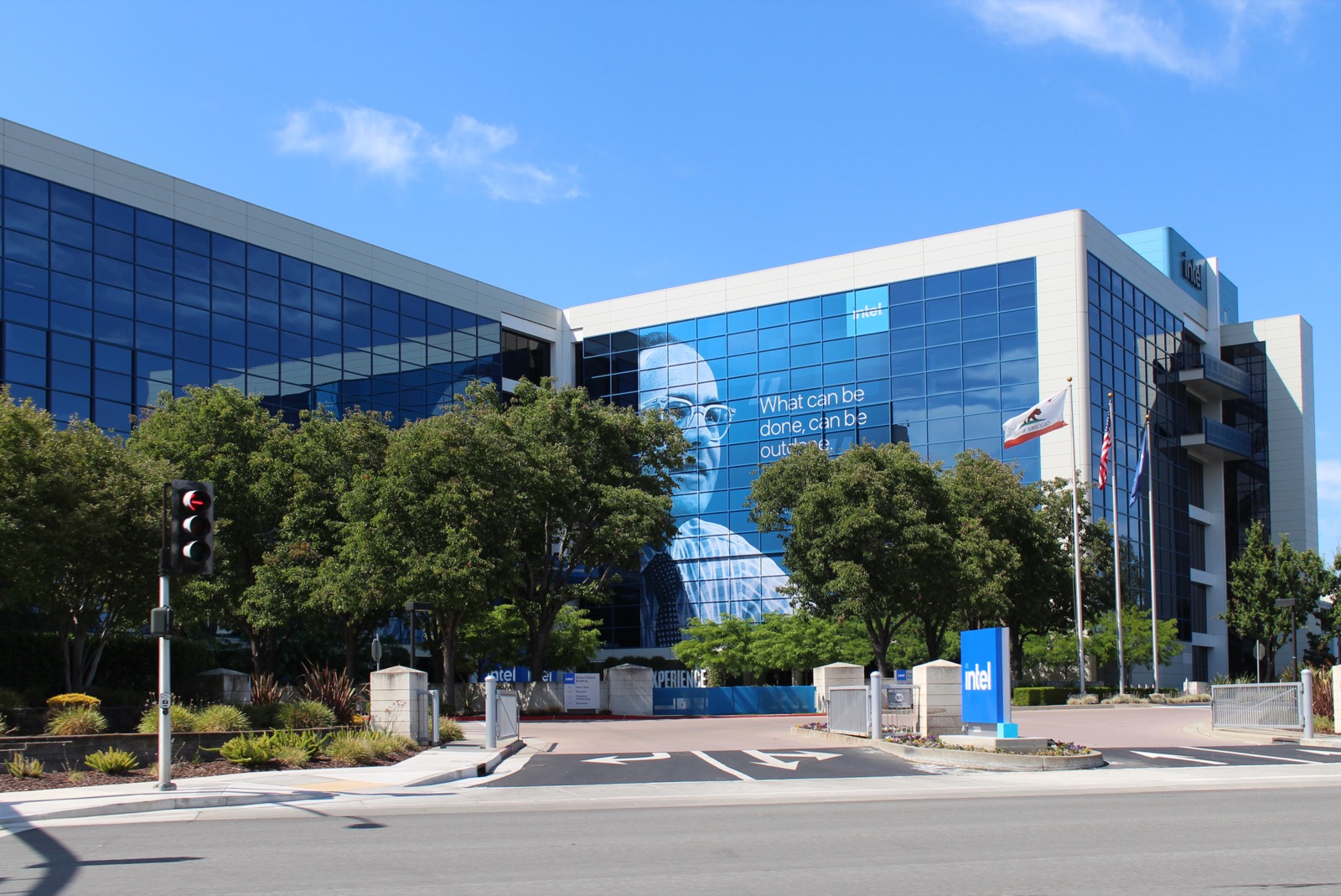

On 1 December Pat Gelsinger retired from Intel, after a career of more than 40 years at the firm, which, by his own account, “has been my life for the bulk of my working career”.1SEC EDGARIntel Announces Retirement of CEO Pat Gelsinger (Form 8-K, Exhibit 99.1)2 Dec 2024 Retirement was the board’s word. The timing, a Sunday, and the fact that he also left its ranks the same day suggested something less leisurely. Intel’s stock had fallen 52% this year, and its market value was less than half its level in 2021, the year he returned as chief executive.3CNBC, via NBC Bay AreaIntel CEO Pat Gelsinger is out2 Dec 2024
The numbers explain the board’s patience, or the lack of it. In the third quarter Intel lost $16.6bn on revenue of $13.3bn, which is an unusual ratio for a firm that sells things people want.2SEC EDGARIntel Reports Third-Quarter 2024 Financial Results (Form 8-K, Exhibit 99.1)31 Oct 2024 Most of the loss was accounting: $15.9bn of impairment charges and $2.8bn of restructuring.2SEC EDGARIntel Reports Third-Quarter 2024 Financial Results (Form 8-K, Exhibit 99.1)31 Oct 2024 But accounting charges are what boards write when they have stopped believing in earlier forecasts. Intel had already said in August that it would cut more than 15% of its workforce under a plan to save $10bn.3CNBC, via NBC Bay AreaIntel CEO Pat Gelsinger is out2 Dec 2024 It was still working towards that goal, but not yet there.2SEC EDGARIntel Reports Third-Quarter 2024 Financial Results (Form 8-K, Exhibit 99.1)31 Oct 2024
The strategy was coherent. He set out to make Intel a contract manufacturer as well as a designer of chips. By October he could report that the firm’s 18A process was “healthy and continues to progress well”, and that Intel intended to make its foundry an independent subsidiary.2SEC EDGARIntel Reports Third-Quarter 2024 Financial Results (Form 8-K, Exhibit 99.1)31 Oct 2024 Washington agreed to pay for part of it. On 26 November Intel and the Commerce Department settled terms for up to $7.86bn in direct funding under the CHIPS Act, with a tax credit worth up to 25% of qualified investment above $100bn on top.4Intel, via SecurityInfoWatchIntel, Biden-Harris Administration finalize $7.86 billion funding award under US CHIPS Act27 Nov 2024
The plan was also expensive and slow, and shareholders do not wait politely. The board has named David Zinsner, the finance chief, and Michelle Johnston Holthaus, head of the new Intel Products unit, as interim co-chief executives, and formed a search committee for a permanent successor.1SEC EDGARIntel Announces Retirement of CEO Pat Gelsinger (Form 8-K, Exhibit 99.1)2 Dec 2024 Frank Yeary, the independent chairman, becomes interim executive chair. His statement mixed contrition with continuity. “Returning to process leadership is central to product leadership”, he said, while saying the board is “committed to restoring investor confidence”.1SEC EDGARIntel Announces Retirement of CEO Pat Gelsinger (Form 8-K, Exhibit 99.1)2 Dec 2024 Foundry leadership is unchanged, and the new pair will focus on driving returns on those investments.1SEC EDGARIntel Announces Retirement of CEO Pat Gelsinger (Form 8-K, Exhibit 99.1)2 Dec 2024
The case for patience is real. A new chief executive cannot conjure a leading-edge process, and a firm that lurches between strategies every two years will lose to one that does not. Mr Gelsinger’s bet on 18A has not yet been tested in the market. Changing course now could mean having paid for the expensive half of the plan without collecting the benefit.
But consider the structure. A firm’s design business and its foundry have different customers, different rivals and different needs, and Intel has already said it intends to make the foundry independent.2SEC EDGARIntel Reports Third-Quarter 2024 Financial Results (Form 8-K, Exhibit 99.1)31 Oct 2024 Half-measures are costly. A foundry that must serve Intel’s own products first will struggle to convince Intel’s competitors it is neutral, and a design team forced to use its sister company’s process cannot pick the best one.
We think the board should treat the interim period as the moment to finish what Mr Gelsinger began. Make the foundry a genuinely separate company, with outside capital and its own board. The subsidy, which exists to build fabs, not to preserve an org chart, can follow the fabs. Taxpayers should not be asked to underwrite a conglomerate when they could be underwriting a competitor.
Intel has two interim bosses, one search committee and one very long to-do list. It would be a shame to fill the vacancy before settling what the job is.
This article appeared in the Business & Finance section of Issue No. 2, 4 October to 10 October 2026
Sources
- Intel Announces Retirement of CEO Pat Gelsinger (Form 8-K, Exhibit 99.1) SEC EDGAR, 2024-12-02 abcd
- Intel Reports Third-Quarter 2024 Financial Results (Form 8-K, Exhibit 99.1) SEC EDGAR, 2024-10-31 abcde
- Intel CEO Pat Gelsinger is out CNBC, via NBC Bay Area, 2024-12-02 ab
- Intel, Biden-Harris Administration finalize $7.86 billion funding award under US CHIPS Act Intel, via SecurityInfoWatch, 2024-11-27 a