AI and electricity
Meltdown on the meter
Microsoft's restart of a reactor at Three Mile Island is the right way for a data centre to buy power, and regulators should make it the rule, not the exception, so that ordinary households stop paying for the machines' appetite
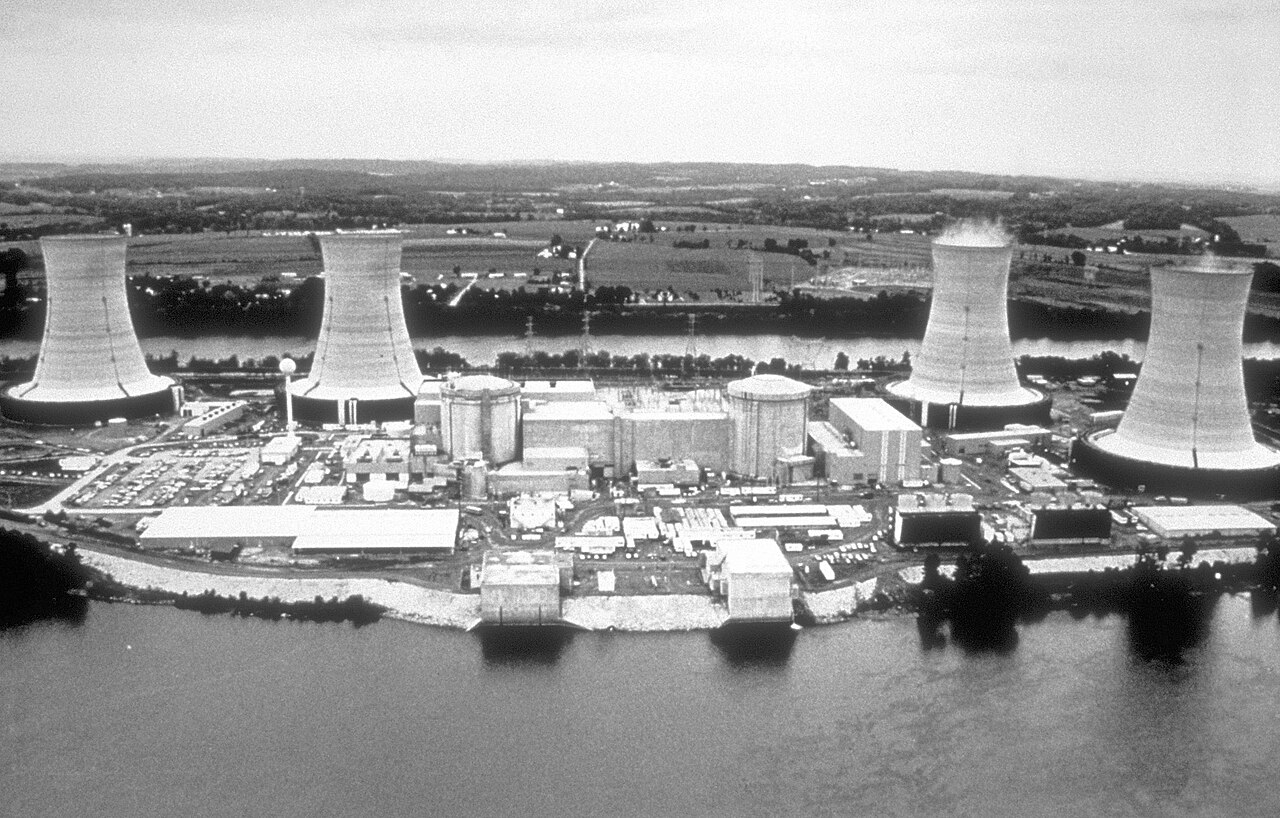

Exactly five years ago today, on 20 September 2019, the lights went out at Three Mile Island’s one working reactor. Constellation’s own statement now marks the anniversary by announcing that the reactor will come back.1Constellation EnergyConstellation to Launch Crane Clean Energy Center, Restoring Jobs and Carbon-Free Power to the Grid20 Sept 2024 The unit that is to be restarted, Unit 1, was not the one that melted down in 1979; that was its neighbour, Unit 2.4US Nuclear Regulatory CommissionBackgrounder on the Three Mile Island Accident20 Sept 2024 Unit 1 simply stopped generating in 2019.4US Nuclear Regulatory CommissionBackgrounder on the Three Mile Island Accident20 Sept 2024 Its second life is being paid for by a customer that did not exist when it was switched off: a software company with a rather large appetite.
Under a 20-year power purchase agreement, Microsoft will buy the output of the plant, rechristened the Crane Clean Energy Center, which Constellation expects to be back online in 2028 with about 835MW of carbon-free capacity.1Constellation EnergyConstellation to Launch Crane Clean Energy Center, Restoring Jobs and Carbon-Free Power to the Grid20 Sept 2024 The firm promises 3,400 direct and indirect jobs and says the plant will add $16bn to Pennsylvania’s economy.1Constellation EnergyConstellation to Launch Crane Clean Energy Center, Restoring Jobs and Carbon-Free Power to the Grid20 Sept 2024 The release does not give a price. Nor does it need to, for the argument that follows.
Ten times the bill
PJM capacity auction, total cost to buyers, $bn
| Total cost | |
|---|---|
| 2024/25 | 2.2 |
| 2025/26 | 14.7 |
Source: PJM 2025/2026 Base Residual Auction report2
We welcome the deal and think it should be copied. Not because nuclear power is fashionable, though it has become so, but because of who is paying. A firm that wants a great deal of reliable power for a data centre has gone to a reactor owner, signed a contract for two decades and committed to bringing a plant back. The cost of the new demand lands, at least in part, on the firm that created it. That is how markets are meant to work, and it is a less common sight than it should be.
The alternative is the one households are already meeting. Consider the grid operator PJM, which runs an annual auction to guarantee enough generating capacity. In the auction held in July 2024, the price for most of its territory was $269.92 per megawatt-day, up from $28.92 a year earlier.2PJM Interconnection2025/2026 RPM Base Residual Auction Report30 Jul 2024 That is more than nine times as much, and the total cost to buyers for the 2025/26 year came to $14.7bn.2PJM Interconnection2025/2026 RPM Base Residual Auction Report30 Jul 2024 Load forecasts for the coming year rose by about 3,200MW, around 2.2%, with data centres much discussed as a cause.3POWER MagazinePJM capacity auction prices surge over nine-fold, signal urgent need for new power gen31 Jul 2024 Manu Asthana, PJM’s chief executive, put it mildly: “the supply/demand balance is tightening across the RTO”.3POWER MagazinePJM capacity auction prices surge over nine-fold, signal urgent need for new power gen31 Jul 2024
A price that multiplies more than ninefold in one year, to a bill of $14.7bn, is not mild at all, and it is spread across everyone who plugs anything in. Some of that jump reflects plant closures and transmission limits rather than computers, and an industry group is right to caution that “the results of one auction do not establish a trend”.3POWER MagazinePJM capacity auction prices surge over nine-fold, signal urgent need for new power gen31 Jul 2024 But the direction is plain. When demand surges and supply does not, the clearing price rises for every buyer, including the pensioner in Baltimore who has never asked a chatbot anything.
The tech industry’s best reply is that it is part of the answer. The Microsoft contract shows that a data-centre owner can bring new supply. A restart adds capacity without waiting a decade for a new design, and it uses a site with a grid connection already in place. If a bidding war among data centres for existing power is the alternative, then buying a reactor is the civilised option.
The weakness is scale. One plant of 835MW1Constellation EnergyConstellation to Launch Crane Clean Energy Center, Restoring Jobs and Carbon-Free Power to the Grid20 Sept 2024 is a gesture at a problem measured in tens of gigawatts; PJM alone forecasts a demand increase of 40GW over 15 years.3POWER MagazinePJM capacity auction prices surge over nine-fold, signal urgent need for new power gen31 Jul 2024 Not every developer can restart a reactor, and some will simply connect to the grid and let the auction sort out who pays. The sums above suggest that, in that case, everyone else does.
So regulators should set a rule rather than hope for good behaviour. Large new loads should either bring matching new supply or pay the capacity costs they cause, through long tariffs written into state and federal rules. Utilities should be told to publish what such customers pay. Microsoft has shown that a contract can do this voluntarily. Others should be required to do it without the volunteering.
Three Mile Island once taught America to fear what happens when a reactor is badly run. Its second lesson is that somebody should be made to pay for the electricity.
This article appeared in the Leaders section of Issue No. 2, 4 October to 10 October 2026
Sources
- Constellation to Launch Crane Clean Energy Center, Restoring Jobs and Carbon-Free Power to the Grid Constellation Energy, 2024-09-20 abcd
- 2025/2026 RPM Base Residual Auction Report PJM Interconnection, 2024-07-30 ab
- PJM capacity auction prices surge over nine-fold, signal urgent need for new power gen POWER Magazine, 2024-07-31 abcd
- Backgrounder on the Three Mile Island Accident US Nuclear Regulatory Commission, 2024-09-20 ab