America v Amazon
Prime suspect
The government's case against Amazon is strongest where it targets the penalty for cheap prices elsewhere, and weakest where it treats a popular service as a crime.
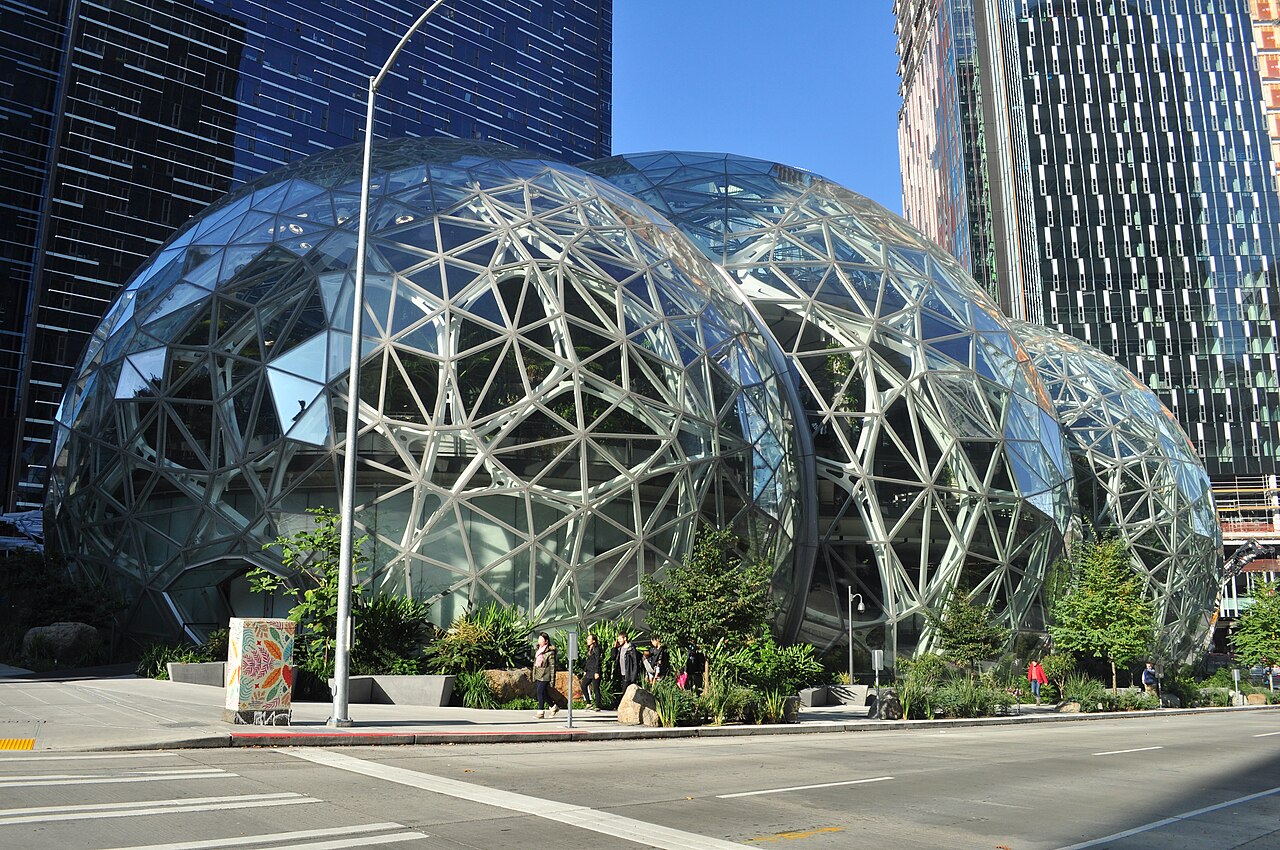

Nobody has ever been sued for selling things too cheaply and delivering them too fast. On 26 September the Federal Trade Commission, joined by 17 states, filed a complaint in a federal court in Seattle that comes close to saying so.1Federal Trade CommissionFTC Sues Amazon for Illegally Maintaining Monopoly Power26 Sept 2023,2Federal Trade CommissionFTC et al. v. Amazon.com, Inc. (Amazon eCommerce), No. 2:23-cv-01495 (W.D. Wash.)26 Sept 2023 The defendant is Amazon. The commissioners voted 3-0 to bring the case, a unanimity Washington usually reserves for lunch orders.1Federal Trade CommissionFTC Sues Amazon for Illegally Maintaining Monopoly Power26 Sept 2023
The charge is not that Amazon is big. It is that Amazon is a monopolist twice over: in what the complaint calls the “online superstore” market, where shoppers buy, and in “online marketplace services”, where sellers rent the shelf.1Federal Trade CommissionFTC Sues Amazon for Illegally Maintaining Monopoly Power26 Sept 2023 Lina Khan, the FTC’s chair, says the firm has used “a set of punitive and coercive tactics to unlawfully maintain its monopolies”.1Federal Trade CommissionFTC Sues Amazon for Illegally Maintaining Monopoly Power26 Sept 2023 The agency wants a permanent injunction rather than a cheque.1Federal Trade CommissionFTC Sues Amazon for Illegally Maintaining Monopoly Power26 Sept 2023 The suit will not have startled the defendant, which told investors in February that it faced “a number of open investigations” into whether aspects of its operations “violate competition rules”, including its marketplace for sellers.3SECAmazon.com, Inc. Form 10-K for fiscal year 20223 Feb 2023
We think the case is half right, and the half that is right matters.
Start with the part we like. The complaint says Amazon punishes sellers that offer lower prices elsewhere, ranking them so low in search results that they are effectively invisible.1Federal Trade CommissionFTC Sues Amazon for Illegally Maintaining Monopoly Power26 Sept 2023 If true, this is not competition. A platform that taxes discounts on rival sites is protecting its own fees, not its customers. Rivals cannot win shoppers by being cheaper if the cheaper seller is hidden. The complaint adds that Amazon’s fees can total close to half of a seller’s revenue, a figure a contestable market for marketplace services would struggle to sustain.1Federal Trade CommissionFTC Sues Amazon for Illegally Maintaining Monopoly Power26 Sept 2023 A dominant firm that stops others undercutting it has a name in the textbooks, and it is not “customer obsession”.
The second theory is subtler. Prime eligibility, the complaint says, is close to a necessity for sellers, and Amazon conditions it on their using its own fulfilment service.1Federal Trade CommissionFTC Sues Amazon for Illegally Maintaining Monopoly Power26 Sept 2023 That, the FTC argues, makes it substantially more expensive to sell on other platforms.1Federal Trade CommissionFTC Sues Amazon for Illegally Maintaining Monopoly Power26 Sept 2023 Tying is a respectable antitrust concern. The question for the court is whether the bundle is a service sellers want or a toll they must pay. Plenty of sellers, we suspect, would say both.
Now the counter-argument, which Amazon will make and which deserves a fair hearing. For decades American courts have asked whether conduct harms consumers, not whether it harms rivals, and shoppers have wide selection, low prices and parcels that arrive within days. A market in which the leading firm built the best product is not, on its face, a market in which competition has failed. The complaint also accuses Amazon of replacing organic search results with ads and of biasing results towards its own products.1Federal Trade CommissionFTC Sues Amazon for Illegally Maintaining Monopoly Power26 Sept 2023 Those are claims about quality, and they will have to be proved with evidence, not with irritation at sponsored listings. The agency faces the usual problem of defining a market, too: if shoppers can also buy in stores, on rival sites and from brands directly, an “online superstore” may look less like a monopoly than a sub-category.
We answer that the consumer-welfare test has never required a regulator to wait until the shelves are bare. A firm that makes it costly for sellers to charge less elsewhere is shielding itself from the discipline that keeps the good service good. Today’s low prices are the proceeds of past competition; the question is whether future competition is allowed to exist. The right remedy is accordingly narrow. Ban the penalty on lower prices elsewhere. Let sellers use Prime on fair terms without surrendering their logistics. Leave the fast delivery, the returns and the selection alone, since customers can plainly see that those are the point.
The danger is that a long, loud trial drifts towards the weaker case: that being enormous and loved is itself the offence. The FTC should resist that, and so should the states beside it.
Amazon built a shop that customers adore. It would be a pity if its main lesson to sellers were never to be cheaper anywhere else.
This article appeared in the Policy & Regulation section of Issue No. 1, 27 September to 3 October 2026
Sources
- FTC Sues Amazon for Illegally Maintaining Monopoly Power Federal Trade Commission, 2023-09-26 abcdefghij
- FTC et al. v. Amazon.com, Inc. (Amazon eCommerce), No. 2:23-cv-01495 (W.D. Wash.) Federal Trade Commission, 2023-09-26 a
- Amazon.com, Inc. Form 10-K for fiscal year 2022 SEC, 2023-02-03 a