Biden and artificial intelligence
Order, order
Mr Biden's AI order is sensible where it asks developers to show their homework and hollow where it pretends a presidential pen can do Congress's job.
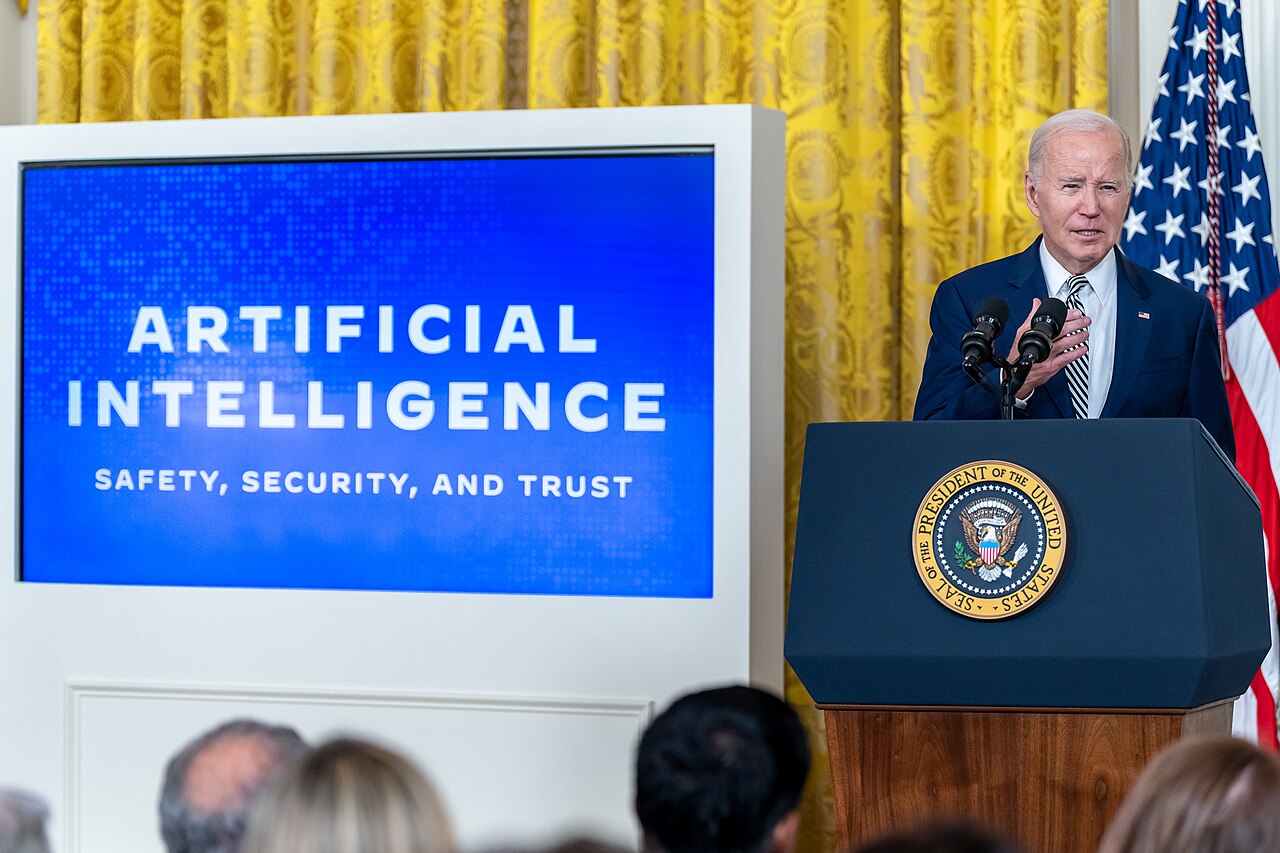

In 1950, with American troops freezing in Korea and factories short of steel, Congress passed the Defense Production Act, a law for mobilising industry in a national emergency. On 30 October 2023 the White House dusted it off for a new purpose. The order President Joe Biden signed that day invokes the act to require companies developing powerful foundation models to tell the government when they are training one, and to share the results of their safety tests.1The White House, via American Presidency ProjectFact Sheet: President Biden issues executive order on safe, secure, and trustworthy artificial intelligence30 Oct 2023,2NextgovBiden signs AI order but stresses need for legislation30 Oct 2023
Mr Biden called the order “the most significant action any government anywhere in the world has ever taken on AI safety, security and trust”.2NextgovBiden signs AI order but stresses need for legislation30 Oct 2023 That is a high bar, and a low hurdle for a government that has so far taken almost no action at all. We think the order is a sensible first draft that asks for the right thing, disclosure, and then wanders off into the territory of wish lists.
Start with what is good. The disclosure rule is narrow. Goodwin, a law firm, notes that it turns on “dual-use foundation models”, a category defined by criteria in the order rather than by a company’s size.3GoodwinWhite House unveils landmark executive order on safe, secure, and trustworthy artificial intelligence31 Oct 2023 Those who meet it, in practice a handful of well-funded labs, are asked to report rather than to ask permission. A regulator that knows what the frontier looks like is better placed than one that guesses, and a reporting duty costs a lab far less than a licensing regime would.
The same goes for testing. The National Institute of Standards and Technology is told to set “rigorous standards for extensive red-team testing”, the practice of hiring people to break a system before the public does.1The White House, via American Presidency ProjectFact Sheet: President Biden issues executive order on safe, secure, and trustworthy artificial intelligence30 Oct 2023 Standards written by a technical agency, rather than a legislature, are a fine way to keep rules in step with a fast-moving field. The Commerce Department is also to develop guidance on content authentication and watermarking, so that machine-made content can be labelled.1The White House, via American Presidency ProjectFact Sheet: President Biden issues executive order on safe, secure, and trustworthy artificial intelligence30 Oct 2023 Watermarks are easy to strip, and we would not bet much on them. But a labelling standard that firms may adopt is cheap and harmless.
Now the doubts. Much of the order is a set of instructions to federal agencies, which is the correct instinct for a document that can direct the government but cannot easily bind everyone else.1The White House, via American Presidency ProjectFact Sheet: President Biden issues executive order on safe, secure, and trustworthy artificial intelligence30 Oct 2023 It also means the headline claim is thinner than it sounds. The Senate majority leader, Chuck Schumer, said as much. Legislation, he said, would “cement what the president has done but also expand it and enhance it in ways that an executive order can’t”, and would make sure “everyone obeys it, not just people who have contracts with the government”.2NextgovBiden signs AI order but stresses need for legislation30 Oct 2023 Zoe Lofgren, the ranking Democrat on the House science committee, applauded the order but added that “Congress will need to act to ensure governance of AI”.4House Committee on Science, Space, and Technology (Democrats)Ranking Member Lofgren reacts to Biden administration executive order on artificial intelligence30 Oct 2023
Mr Biden himself called on Congress to pass bipartisan data-privacy legislation.1The White House, via American Presidency ProjectFact Sheet: President Biden issues executive order on safe, secure, and trustworthy artificial intelligence30 Oct 2023 Congress has been asked for that, on and off, for a decade. An order whose second half depends on a legislature with that record should be read as a hope.
There is also a case against the whole exercise, and critics will make it. Reporting rules hand incumbents a compliance moat and the government a list of who is building what, and the Defense Production Act was not written with chatbots in mind. The worry is fair. A mandate that reaches only the largest firms is, by design, a rule the largest firms can afford. But the alternative is not freedom. It is a dozen state laws, a European rulebook and a regulator that learns of a dangerous model from a press release. Disclosure to a federal agency, with a high threshold and no licence, is the lightest intervention on offer and the least likely to freeze the market in its present shape.
The right next step is therefore modest. Congress should write the disclosure duty into statute, with a clear definition and a way to adjust the threshold as hardware gets cheaper. It should leave the technical detail to NIST. And it should resist the temptation, already visible on Capitol Hill, to add a licensing scheme that would turn a handful of labs into a cartel.
An executive order is a promise to do the homework. The test is whether anybody hands it in.
This article appeared in the Policy & Regulation section of Issue No. 2, 4 October to 10 October 2026
Sources
- Fact Sheet: President Biden issues executive order on safe, secure, and trustworthy artificial intelligence The White House, via American Presidency Project, 2023-10-30 abcde
- Biden signs AI order but stresses need for legislation Nextgov, 2023-10-30 abc
- White House unveils landmark executive order on safe, secure, and trustworthy artificial intelligence Goodwin, 2023-10-31 a
- Ranking Member Lofgren reacts to Biden administration executive order on artificial intelligence House Committee on Science, Space, and Technology (Democrats), 2023-10-30 a