Europe's Digital Markets Act
Gate expectations
Brussels was right to name its gatekeepers, but it should be judged on whether rivals win customers, not on how many rules the six firms obey
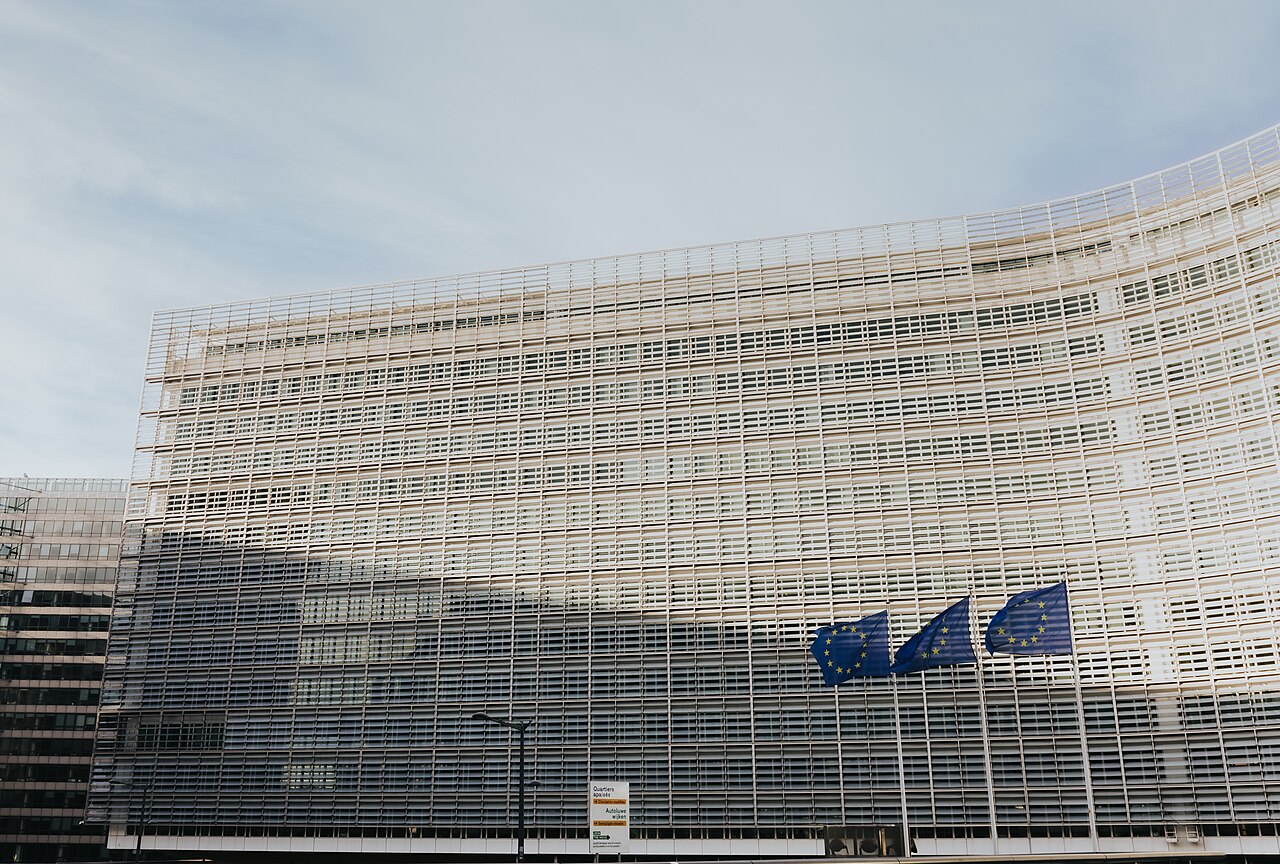

Six firms were told on 6 September that they now run gates. Alphabet, Amazon, Apple, ByteDance, Meta and Microsoft were named by the European Commission as the first “gatekeepers” under the Digital Markets Act (DMA), covering 22 core platform services between them.1European CommissionDigital Markets Act: Commission designates six gatekeepers6 Sept 2023 It is a short list with a long reach. The firms have six months to comply with a rulebook that tells them, among other things, what they may not do to their own customers.1European CommissionDigital Markets Act: Commission designates six gatekeepers6 Sept 2023,2European CommissionAbout the Digital Markets Act6 Sept 2023
The list is also a small act of honesty. The DMA does not ask whether a firm has abused its power. It asks whether it is big enough to have some. A company qualifies with EU turnover of EUR 7.5bn in each of the last three years, or a market value of EUR 75bn, and at least 45m monthly users plus 10,000 business users on a platform that businesses need.3EUR-LexRegulation (EU) 2022/1925 (Digital Markets Act)12 Oct 2022 Samsung also notified the Commission and was not designated.1European CommissionDigital Markets Act: Commission designates six gatekeepers6 Sept 2023 Nobody in Brussels will have lost sleep over the fact that none of the six is European.
We think the designation is right, and the law’s central bargain is a fair one. Markets work when buyers can leave and rivals can get in. A phone maker that controls the only road to its customers, or a search engine that ranks its own shop first, sits uneasily with both. The DMA’s don’ts are mostly of that kind: no ranking your own products above equivalent third-party ones, no blocking users from linking out to other businesses, no stopping people uninstalling pre-installed software, no tracking users outside the core service for targeted ads without effective consent.2European CommissionAbout the Digital Markets Act6 Sept 2023 Most of these are things a competitive market would eventually punish. The law simply saves the wait.
The enforcement teeth are real. Fines can reach 10% of worldwide annual turnover, or 20% for repeat offenders, with periodic penalties on top.2European CommissionAbout the Digital Markets Act6 Sept 2023 For a firm the size of Alphabet that is a figure with a great many noughts. In extremis, after a market investigation, the Commission may impose structural remedies, although the law calls these a last resort.2European CommissionAbout the Digital Markets Act6 Sept 2023
Now the strongest objection, which is that Europe has built a regulatory wall around a problem it did not create and cannot fix. The regime, say its critics, will make products worse, delay features for European users and hand the Commission a licence to micromanage design. There is something in this. A rule that bans “self-preferencing” must define it, and the definition will be argued over for years by lawyers who are paid by the hour and by the argument.
But the objection proves less than it appears to. The DMA is a conduct code, not a break-up order. Where it bites, it mostly asks for access: interoperability, data portability, the freedom for businesses to deal with customers on their own terms.2European CommissionAbout the Digital Markets Act6 Sept 2023 Those are the conditions under which smaller firms can compete, and a pro-market case for the law starts there. It is also, one notes, what the large firms already do for each other when it suits them.
The risks lie elsewhere. The first is scope creep. The Commission’s own Q&A points to market investigations involving services such as Gmail, Outlook, Edge, Bing, Microsoft Advertising and iMessage,4European CommissionDigital Markets Act: Questions and Answers6 Sept 2023 and each will be a chance to ask whether a service is truly a gate or merely a popular door. A regulator that designates by reputation will soon be designating by mood. The second is the temptation to count compliance as success. A gatekeeper that ticks every box, while its rivals still cannot reach a customer, has won the exercise.
So we would hold the Commission to a different test, and publish it. Within two years, are there more challengers on the app stores, search engines and advertising platforms the law covers, and are prices and choices better for ordinary users? If the answer is no, the DMA is a compliance industry. If it is yes, Brussels will have regulated a market into working, which would be a first.
The gatekeepers have been named. Next comes the harder question of whether anyone is knocking.
This article appeared in the Policy & Regulation section of Issue No. 2, 4 October to 10 October 2026
Sources
- Digital Markets Act: Commission designates six gatekeepers European Commission, 2023-09-06 abc
- About the Digital Markets Act European Commission, 2023-09-06 abcde
- Regulation (EU) 2022/1925 (Digital Markets Act) EUR-Lex, 2022-10-12 a
- Digital Markets Act: Questions and Answers European Commission, 2023-09-06 a