Europe's AI Act
Act of faith
Europe has passed the world's first comprehensive AI law by a wide margin; its real test is whether a rulebook written before the products existed can bind the firms that now write the products
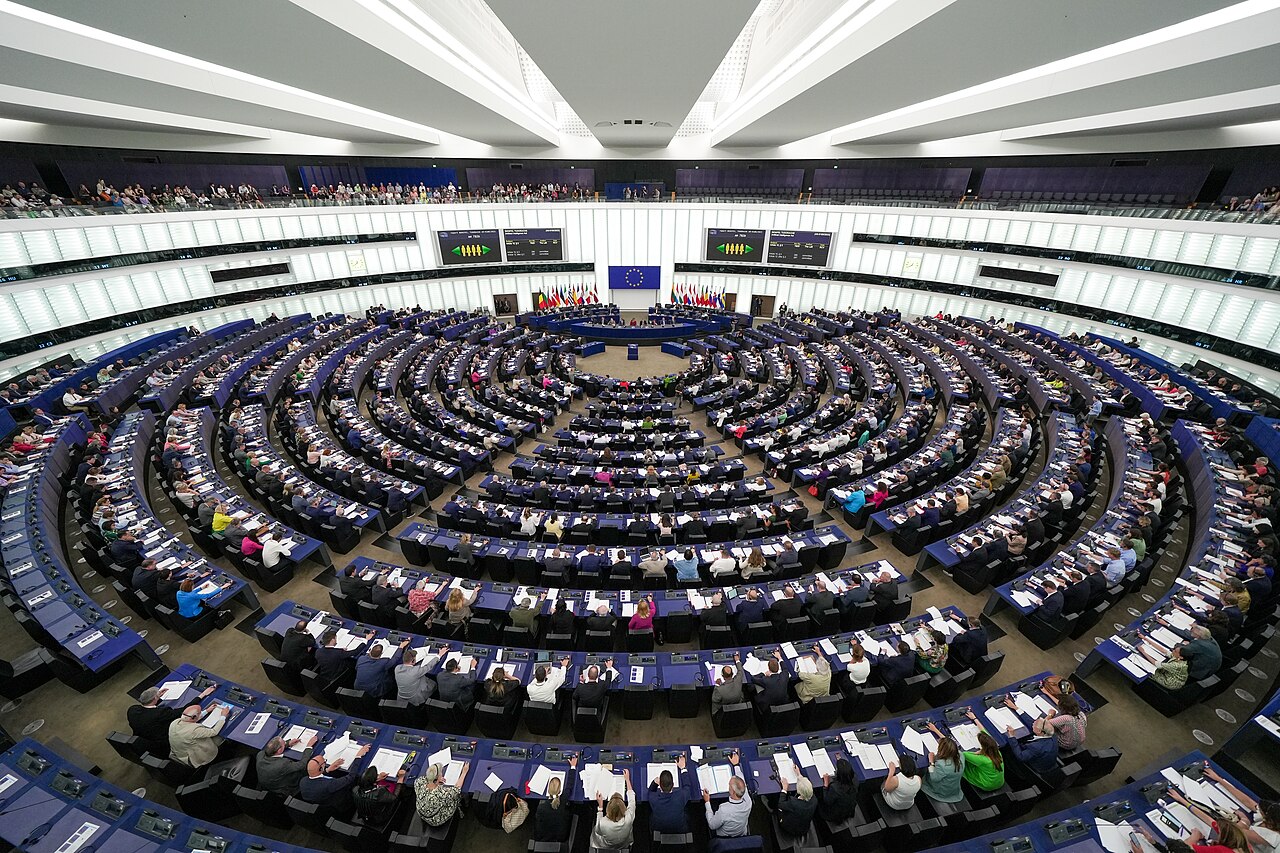

On 13 March the European Parliament voted 523 to 46, with 49 abstentions, to adopt the Artificial Intelligence Act.1European ParliamentArtificial Intelligence Act: MEPs adopt landmark law13 Mar 2024 Brando Benifei, one of its two rapporteurs, said that “we finally have the world’s first binding law on artificial intelligence”.1European ParliamentArtificial Intelligence Act: MEPs adopt landmark law13 Mar 2024 It is rare for Brussels to be first at anything in technology, and the margin suggests members knew it. Among those who took a side, the law passed by better than eleven to one.
The law sorts AI by the harm it might do. Some uses are banned outright: social scoring, emotion recognition at work and in schools, untargeted scraping of faces from the internet or CCTV, and predictive policing based solely on profiling.1European ParliamentArtificial Intelligence Act: MEPs adopt landmark law13 Mar 2024 “High-risk” systems, in areas such as hiring, education, essential services and migration, must be assessed, logged, overseen by humans and explained to the people they affect.1European ParliamentArtificial Intelligence Act: MEPs adopt landmark law13 Mar 2024 Penalties run to EUR35m or 7% of global turnover at the top end.2European ParliamentArtificial Intelligence Act: deal on comprehensive rules for trustworthy AI9 Dec 2023 A fine of 7% of turnover is a rounding error only when it is someone else’s.
How MEPs voted on the AI Act, 13 March 2024
Votes cast
| Votes | |
|---|---|
| In favour | 523 |
| Against | 46 |
| Abstentions | 49 |
Source: European Parliament1
We think the Act is better than its critics say and worse than its authors believe. Better, because the bans are narrow, the risk tiers are proportionate and most AI, from spam filters to video-game opponents, is left alone. A rule that says “do not score citizens like a credit bureau run by the secret police” is one a market economy can live with. Worse, because the most consequential part was bolted on late and tells us what its drafters feared rather than what they understood.
That part covers general-purpose models. The original draft was about products with a defined purpose. When foundation models arrived, lawmakers added duties for them: technical documentation, respect for EU copyright law and published summaries of training content, with extra testing, evaluation and incident reporting for models posing “systemic risks”.2European ParliamentArtificial Intelligence Act: deal on comprehensive rules for trustworthy AI9 Dec 2023 Until harmonised standards exist, firms may show compliance through codes of practice.2European ParliamentArtificial Intelligence Act: deal on comprehensive rules for trustworthy AI9 Dec 2023 That means the firms with the most lawyers will help to write the rules they must obey. Incumbents regularly discover that regulation is a moat with a compliance department attached.
Europe’s own champions show the risk. Mistral, a young Paris start-up, unveiled its flagship Mistral Large on 26 February.4Mistral AIAu Large26 Feb 2024 On the same day it announced a multi-year partnership with Microsoft, which will supply the supercomputing and sell the model to customers through Azure.3Microsoft AzureMicrosoft and Mistral AI announce new partnership to accelerate AI innovation and introduce Mistral Large first on Azure26 Feb 2024 A firm that must document its training data and report incidents needs a bigger legal team, and one way to afford it is to have a large American partner. We do not say the Act caused Mistral’s deal; it was not yet law. We say it will make such deals more attractive.
The strongest defence is the Brussels effect. Europe is a large market, runs the argument, and firms will follow the strictest regime everywhere rather than build two products. Parliament’s timetable is also generous: bans apply six months after entry into force, general-purpose rules after 12 months, most obligations after 24, and the high-risk duties are listed at 36.1European ParliamentArtificial Intelligence Act: MEPs adopt landmark law13 Mar 2024 Sandboxes in every member state are meant to help start-ups test products.1European ParliamentArtificial Intelligence Act: MEPs adopt landmark law13 Mar 2024 Perhaps that is enough.
It is not. The effect works only if Europe’s rules are the best on offer, and that is not obviously true of rules that took years and a late rewrite. Others will copy a model that works and ignore one that merely exists. The Act still needs a lawyer-linguist check and formal endorsement by the Council.1European ParliamentArtificial Intelligence Act: MEPs adopt landmark law13 Mar 2024 The Council should use the delay to insist that the codes of practice be written with start-ups at the table and not only incumbents, and that regulators measure success by how many European firms reach scale, not how many forms they file.
Europe has regulated a technology it does not yet build. It would be a pity to find it had also written the rules for the firms that do.
This article appeared in the Policy & Regulation section of Issue No. 2, 4 October to 10 October 2026
Sources
- Artificial Intelligence Act: MEPs adopt landmark law European Parliament, 2024-03-13 abcdefg
- Artificial Intelligence Act: deal on comprehensive rules for trustworthy AI European Parliament, 2023-12-09 abc
- Microsoft and Mistral AI announce new partnership to accelerate AI innovation and introduce Mistral Large first on Azure Microsoft Azure, 2024-02-26 a
- Au Large Mistral AI, 2024-02-26 a